
Illuminations on the Lectionary readings for July 19, 2026 (Pentecost 8A/Proper 11)
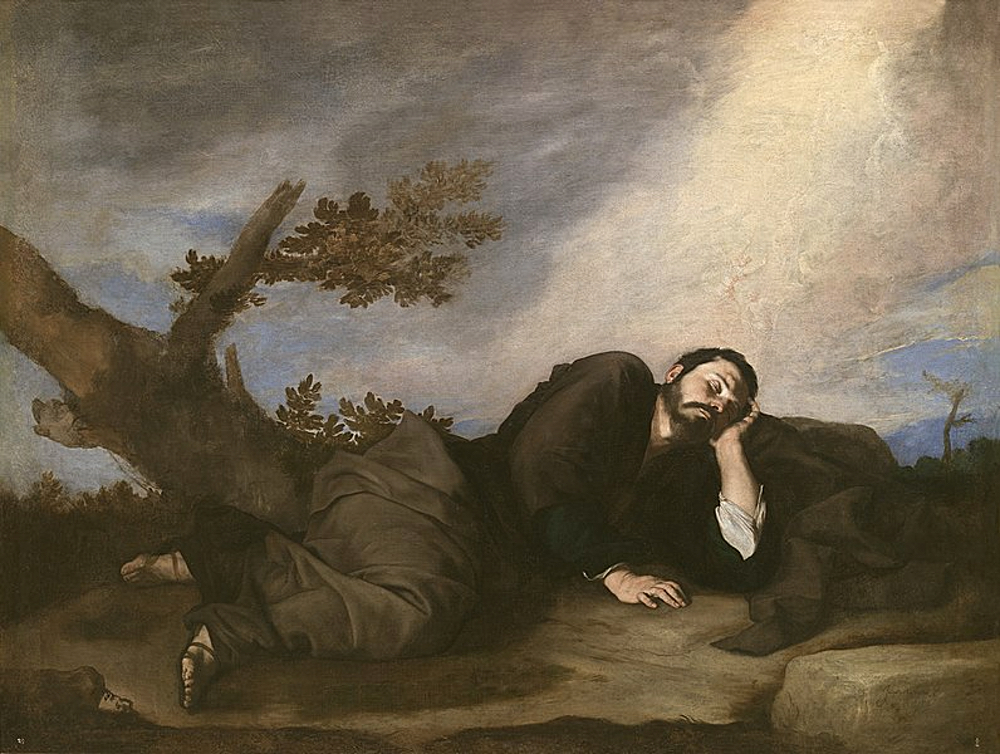
Jacob’s Dream (1639), oil painting on canvas by Jusepe de Ribera (1591-1652). Museo del Prado, Madrid. (Click image to enlarge.)
First Reading (Track One): Genesis 28:10-19a
Sunday’s readings reveal a God of abundant love who appears not in temples or royal courts but in the margins, in the messy realities of our world. In this passage from Genesis, Jacob – a conniving trickster – is in trouble and on the run. He fears the murderous wrath of his angry older twin Esau, whom Jacob tricked out of his inheritance and their father’s blessing. Now Jacob stops to rest. Sleeping in the desert on a stone pillow, he has a remarkable dream of angels going up and down a celestial ladder. Then he hears God’s voice repeating the promise that God gave to his grandfather Abraham and to his father Isaac: God is with him, and his offspring will fill the Earth. Why would God reward such a sneaky cheater? God knows that no human is perfect, but God still loves and protects even broken, troubled people.
First Reading (Track Two): Isaiah 44:6-8
Isiah’s short, poetic prayer of praise in this first reading assures the people in exile that their time in Babylon will eventually end and that they will return home to Jerusalem. The prophet imagines God speaking in the first person, declaring God’s own power and majesty. Whatever beliefs their captors may hold in other gods and other prophecies, Isaiah reassures them, Israel need not fear or be afraid. As they have known since days of old, even in their exile God remains the nation’s rock, redeemer, and leader, the first and last of all creation, beside whom there is no other god.
Psalm (Track One): Psalm 139: 1-11, 22-23
When Jacob ran from angry Esau, he might have prayed something like this portion of Psalm 139. God loves us and knows everything about us, the Psalmist sings. We may run from God, but we can’t hide. In heaven or in the grave, in darkness or in light, up in the sky at sunrise or down in the deepest part of the sea; no matter where we go or how we try to hide, God knows where we are and what we are thinking. God will lead us, hold us, and keep us. Even when we are wicked, God will lead us in right paths.
Alternate Psalm (Track One): Wisdom of Solomon 12:13, 16-19
The Wisdom of Solomon, a short book in the Apocrypha, was written in the name of King Solomon not long before, or even possibly during or after, the time of Jesus and the evangelists. This passage harmonizes with the faith expressed in Psalm 139 in its ringing praise for a powerful, righteous God who reigns over all creation, yet judges the people mildly and with forbearance. To be righteous, we learn, requires us first to be kind.
Psalm (Track Two): Psalm 86:11-17
The Psalmist in these verses from Psalm 86 expresses gratitude for God’s abundant love shown in protection against the violence and threats of enemies. Like the people in exile in the first reading from Isaiah, the writer tells of facing difficulties, even being trapped in the “nethermost Pit” and pursued by a band of violent men. In this frightening situation, he turns to God with faith and trust, calling on God to respond out of grace and compassion, kindness, and truth, to turn to the one who suffers and have mercy, shaming the people’s foes with a sign of God’s favor.
Second Reading: Romans 8:12-25
As we continue our three-month journey through Paul’s letter to the Romans this summer, we find him continuing his lengthy meditation about what life in the Spirit of Christ looks like. Summing up his argument in today’s passage, he reiterates: In flesh, there is death; in the spirit of Christ, there is life. If we live by our own selfish desires, Paul warns, we die. But if we live in the Spirit through Christ, loving God and our neighbor even as we suffer with Christ – as the Roman Christians had suffered through persecution – we are glorified with him and become adopted children and heirs of God. Hope for what we do not yet see, Paul concludes this passage, and wait for it with patience.
Gospel: Matthew 13:24-30, 36-43
Continuing in the spirit of last Sunday’s parable about the sower whose seeds fell on different soils, Jesus now moves on to a discussion of weeds in the wheat field. In this parable, the soil is good, and so is the seed. The sower is planting wheat in the rich soil of his own field. But then an enemy sneaks in at night and sows weeds among the good wheat. This is a problem because the sower can’t uproot the weeds without disturbing the wheat, so it must all grow entwined until harvest, when the weeds can finally be torn out and discarded. Jesus’ explanation to the apostles may seem disturbing with its talk of the furnace of fire, wailing, and gnashing of teeth. But Jesus assures us that those who live righteously will enjoy God’s kingdom.