Illuminations on the Lectionary readings for July 26, 2026 (Pentecost 9A/Proper 12)
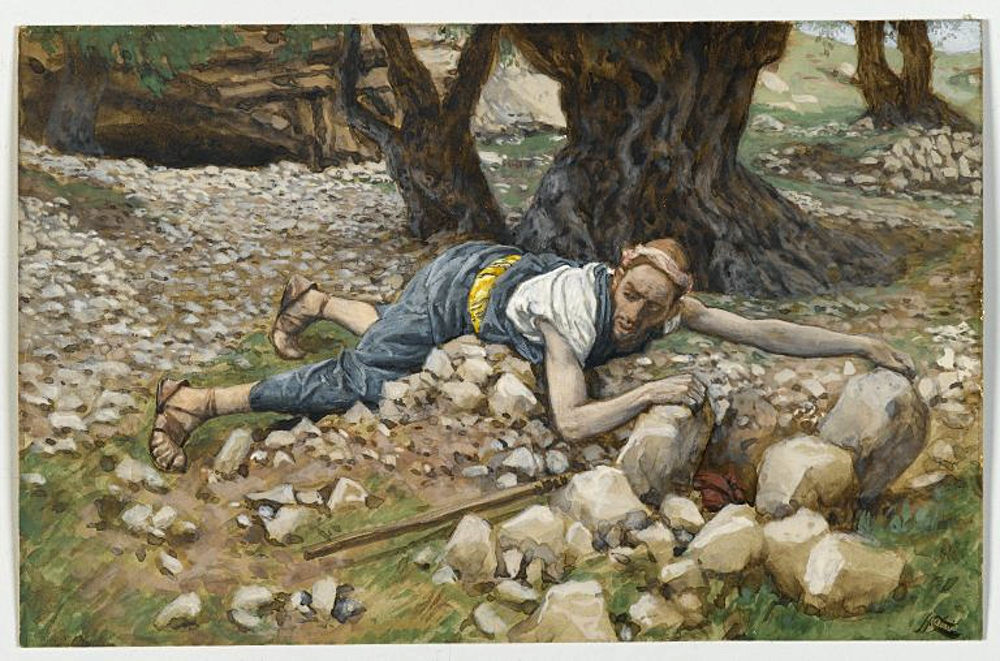
Le trésor enfoui (The Hidden Treasure, c.1886-1894), watercolor painting on gray wove paper by James Tissot (1836-1902). Brooklyn Museum, New York. (Click image to enlarge.)
First Reading (Track One): Genesis 29:15-28
The concept of “biblical marriage” gets complicated in this first reading from Genesis. First, Jacob, a notorious trickster, is tricked in his turn by Laban, who puts him to work for seven years to earn Laban’s daughter Rachel as his bride. But then, much to Jacob’s consternation, Laban switches his older daughter, Leah, for Rachel on their wedding night. Only after working for Laban another seven years does Jacob eventually marry Rachel, too. When we consider scripture’s seemingly casual acceptance of arranged, polygamous marriages, with the women given no opportunity to participate or object, there’s no use in holding up Scripture as the example of a marital ideal. What does remain timeless is the celebration of God’s faithfulness, as told in the stories of Abraham, Isaac, and Jacob and their descendants who will go on to populate all nations.
First Reading (Track Two): 1 Kings 3:5-12
Known in tradition for his great wisdom, King Solomon is likely most remembered for the story – just a few verses after this one – about his wisdom in revealing the real mother in two women’s dispute over a baby by proposing to cut the infant in half. This reading turns back the clock to show us Solomon – the son of King David and Bathsheba – as the new, young king, uncertain and uneasy. In a dream in which God asks Solomon what he would like to be given, the young king chose not long life, riches, or power, but simply asked for wisdom to govern the people well. Pleased by this choice, God grants Solomon a wise and discerning mind.
Psalm (Track One): Psalm 105:1-11, 45b
This portion of Psalm 105 sings a ringing hymn of praise to God and God’s works. It offers thanksgiving for the reward that the Genesis story of Laban’s daughters foretells: God made an everlasting covenant with Abraham, Isaac, and Jacob. God promises that their children would inherit the Promised Land for a thousand generations, in return for their covenant to follow God’s teaching and obey God’s laws.
Alternate Psalm (Track One): Psalm 128
Available as an alternate Track One Psalm, this one reflects similar ideas without specifically recalling the details of the ancestral covenant. Still, its poetic cadences celebrate the joy and the rewards that come to those who follow in God’s way: the fruits of their labor, the happiness and prosperity that they will inherit. Thanks to God’s blessings from Zion, the Psalmist sings, they will be rewarded with secure homes and long and prosperous lives.
Psalm (Track Two): Psalm 119:129-136
Brief selections from Psalm 119, the longest of all the Psalms, are often presented through the Lectionary year. Taken as a whole, the psalm forms an extended celebration of love for God’s law and teaching – Torah, the first five books of the Bible. The verses we read this week celebrate the love of Torah in almost sensuous terms of open-mouthed, breathless longing. God’s statutes are so wonderful that the Psalmist sheds streams of tears at the startling recognition that some people do not follow the law.
Second Reading: Romans 8:26-39
Our extended journey through Paul’s letter to the Christian community in Rome reaches a high point in this passage. His long discussion in which he has contrasted life in the flesh against life in the spirit now comes to its conclusion in a burst of poetic words: If God is for us, who is against us? God’s abiding faithfulness was made manifest through God’s gift of God’s own son. If God gave him up for all of us, nothing in all creation – not hardship, or distress, or persecution, or famine, or nakedness, or peril, or sword – can separate us from the love of God through Jesus.
Gospel: Matthew 13:31-33, 44-52
What is the kingdom of heaven like? Jesus offers quick, thought-provoking glimpses in a quick series of short parables this week. The kingdom is like a tiny mustard seed that grows into a mighty tree! Or yeast that leavens bread! Or wait, is it like buried treasure? A merchant with an expensive pearl? Fishers with a full net? And there’s that scary threat of the fiery furnace again, with the weeping and gnashing of teeth that awaits evildoers. Parables don’t tell us the whole story – they only offer ideas that flash through our consciousness – but every one of them sparks our imagination about God’s kingdom.