
Illuminations on the Lectionary readings for July 12, 2026 (Pentecost 7A/Proper 10)
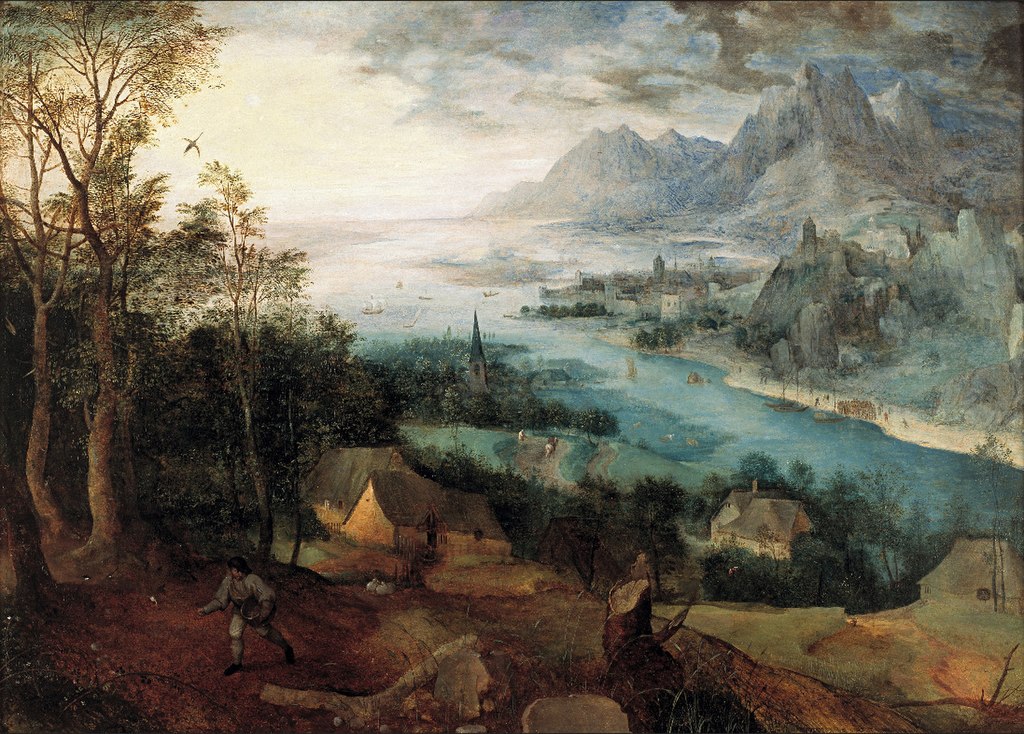
Landscape with the Parable of the Sower (1552), oil painting on panel by Pieter Bruegel the Elder (1526/1530-1569). Timken Museum of Art, San Diego, Calif. (Click image to enlarge.)
First Reading (Track One): Genesis 25:19-34
God promised that Abraham’s descendants would be as numerous as the stars of heaven. But the ancestral legends of the chosen people show us that this outcome won’t be easy. Abraham and Sarah would not celebrate Isaac’s birth until she was 90 years old. In this first reading, we remember that Isaac and Rebekah, too, suffered through 20 barren years before their twins, Esau and Jacob, were born. Jacob, who would grow up as a notorious trickster, would persuade his moments-older twin to give up his rights as firstborn in exchange for a bit of bread and a pot of lentil stew. God, we see again and again, does not choose perfect people but works through flawed and broken humans.
First Reading (Track Two): Isaiah 55:10-13
This reading contains the concluding verses from the second of the three ancient prophets who Bible scholars believe wrote separate prophecies that were eventually combined in this memorable book. Taken as a whole, the full book of Isaiah tells of the exile to Babylon and the people’s eventual return home to Jerusalem, where they build a restored temple. In this passage, Isaiah, having assured the people that God has forgiven their failures of justice, paints a beautiful image of God as the giver of life and sustenance and all that is good. His image of seeds and the sower and Earth’s bounty sets the stage for the parable of the sower that we hear in the Gospel.
Psalm (Track One): Psalm 119:105-112
We hear parts of Psalm 119 a dozen times during the three-year cycle of Lectionary readings, so it will probably come as no surprise to hear that its 176 verses make it the longest of all the Psalms. All of those verses are devoted to a long, loving celebration of the Torah, the first five books of the Bible. The psalms usually translate “Torah” in this context as “law,” “ordinance,” or “decree.” It might be better expressed as “teaching,” a point of view that reveals God’s loving desire for us to live in good relationship with God and each other. Following God’s decrees – God’s teaching – brings joy even in darkness and time of trouble, the Psalmist sings.
Psalm (Track Two): Psalm 65: (1-8), 9-14
This psalm of praise and thanksgiving beautifully mirrors Isaiah’s portrayal of God as the generous creator who made the world and all that is in it, and who provides bountiful water and grain, pastures, and flocks. Perhaps originally sung as a harvest thanksgiving, it expresses praise for the overflowing richness of God’s gifts and for the joy this provides to those who receive it. This abundant seed, the Psalmist sings, has fallen on good soil and yielded a hundredfold.
Second Reading: Romans 8:1-11
The love of God’s law expressed in Torah and the Psalms would have had deep meaning for Paul, who declared himself a devout Pharisee and Torah scholar, righteous and blameless under the law. In his writings, we see Paul evolved a new understanding of that law in his letter to the Romans: Christ’s resurrection has freed us from the law of sin and death, not the law of Torah but of the world. When we are in the world and living in its way of sinful flesh, Paul reasoned, we remain subject to sin and death. But when we turn and accept God’s Spirit through Jesus – when the Spirit dwells in us because Christ is in us – we gain life and peace.
Gospel: Matthew 13:1-9, 18-23
For the rest of the season after Pentecost, we will follow Matthew’s account of Jesus’ final journey with the apostles from Galilee to Jerusalem. In many of these Gospels, Jesus will teach by using parables as colorful, attention-getting metaphors. This week, we hear the parable of the sower, the first parable that Jesus tells in Matthew’s Gospel and the only one that Jesus goes on to explain. The seeds, it seems, are Jesus’s proclamation of God’s coming kingdom on Earth. Although Jesus proclaims it widely, it often falls on inhospitable ground and fails to take root. Only those who hear the word and understand it will indeed bear fruit and yield bountifully.