Pentecost 19A/Proper 22

NOTICE: In coming weeks, we will close this Illuminations page and delete the archives. But don’t worry, this work goes on! Please subscribe to Lectionary Reflections on Substack to continue receiving these weekly comments without charge.

Illuminations on the Lectionary readings for Oct. 4, 2026 (Pentecost 19A/Proper 22)
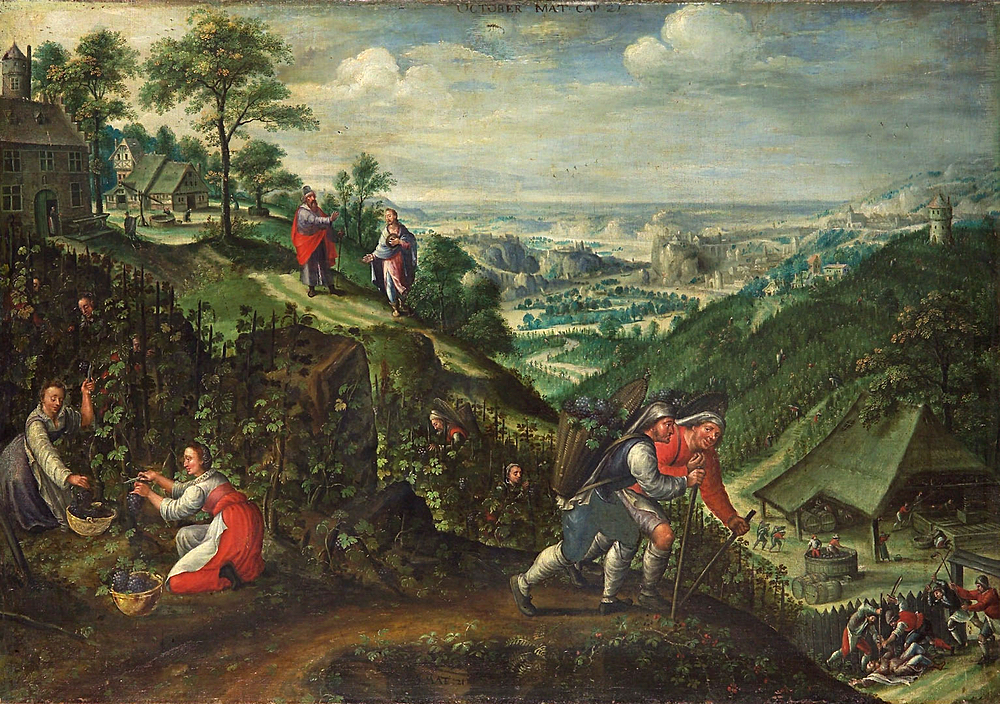
Parable of the wicked tenants

Parable of the wicked tenants (c.1580-1590), oil painting on canvas by Marten van Valckenborch (1535-1612). Kunsthistorisches Museum, Vienna. (Click image to enlarge.)

First Reading (Track One): Exodus 20:1-4, 7-9, 12-20

When God commands, the people try to obey; but it isn’t always easy. Listen for this theme through Sunday’s readings. In this first reading, the people in their wandering through the desert come to a significant encounter at Mount Sinai: Establishing their identity and their hope, they join with God in a lasting covenant. Through Moses they receive the ten commandments that will guide their lives and ensure their righteousness in relationship with God and others. Through the commandments God tests our faith, Moses warns them: “God has come to test you and to put the fear of him upon you so that you do not sin.”

First Reading (Track Two): Isaiah 5:1-7

The Bible is filled with metaphors involving wine, the fruit of the vine, and the vineyards from which wine comes. In this poetic song from Isaiah, God plants a vineyard and cares for it with love. But the harvest yields “wild” grapes, a word that means stinking, worthless, or sour in the original Hebrew. These rogue vines symbolically stand for the people, who disappointed God by failing to be just and righteous. Now, Isaiah prophesies, God will trample down the vines, destroying the vineyard.

Psalm (Track One): Psalm 19

God’s commandments are a wonderful gift, the Psalmist declares in this triumphant hymn as it begins with mighty praise for the beauty of all God’s creation. The commandments are a gift that shows God’s glory in such a shining light that all the heavens sing. All the skies reveal the work of God’s hand! Then the theme turns to God’s commandments, God’s law and teaching. True, just and righteous, God’s commandments stand even above the earthly creation that we have just celebrated, the Psalmist sings: They are sweeter than honey, more precious than gold.

Psalm (Track Two): Psalm 80:7-14

Surely the Psalmist had Isaiah’s book at hand while writing these poetic verses. In the first reading, Isaiah had warned that a disappointed, angry God, loathing the sour fruit, would demolish the vineyard, tearing down its wall and hedge and ordering a drought to lay it waste. Now these verses of Psalm 80 imagine a people who brought a vine out of Egypt, made it mighty, but then neglected it and let it wither. Now they beg a compassionate God to regard and restore the bountiful vines, in a suggestion of hope that was absent from Isaiah’s dark verses.

Second Reading: Philippians 3:4b-14

The verses just preceding this reading provide needed context: After Paul left Philippi, other Christians preaching a more rigid Jewish Christianity arrived and told the people of this Macedonian church that Paul’s teaching was wrong. They must strictly follow Jewish law. including purity laws and circumcision, in order to be Christians, these interlopers told this community of Gentile converts. Paul warned the Philippians to beware of these teachers, calling them “dogs … evil workers … those who mutilate the flesh!” Now Paul reminds them that he is a devout Jew himself, a Pharisee, observant and righteous. But now, he says, everything has changed: The old commandments mean nothing without Christ as the context in which to hear them.

Gospel: Matthew 21:33-46

Jesus, still arguing with the temple authorities, tells another challenging parable set in a vineyard: Its owner has gone to another country, hiring tenants to tend the vines for him. When he sends his slaves to get the produce, though, the tenants beat them up and kill them. They do the same to another group of slaves the owner sends after that. Then, incredibly, when the owner sends his own son, the tenants kill him, too! What, Jesus asks, should the owner do? Surely he will kill the evil tenants, the priests and Pharisees respond. But Jesus gives the parable yet another twist, declaring that those who work to produce the fruit will be the ones who inherit the Kingdom of God. Angered, the temple leaders start plotting to arrest Jesus.
Pentecost 19A

Thoughts on Sunday’s Lessons for Oct. 11, 2020

First Reading (Track One): Exodus 32:1-14


Even when we do terrible things, even when we wallow in sin, God finds a way to forgive us in a banquet of loving grace.

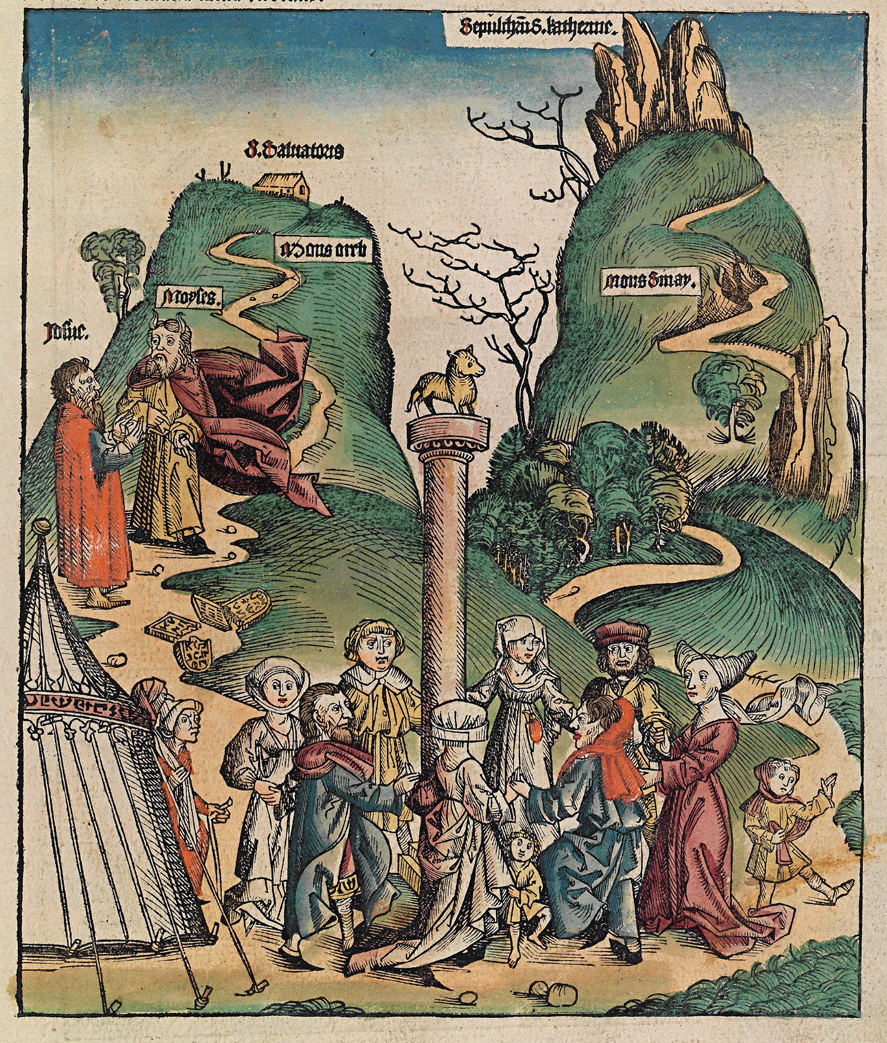
Dancing Around the Golden Calf

Dancing Around the Golden Calf from The Nuremberg Chronicle (1493), illustrative woodcut from the workshop of Michel Wolgemut. (Click image to enlarge.)

This beautiful promise echoes through this week’s readings, beginning with the startling story we hear in Sunday’s Track One first reading: Moses is up on the mountain, talking with the Holy One, but things are going badly wrong below. The people, scared by Sinai’s smoke and thunder, are afraid that Moses won’t come back, don’t take long to break their brand-new covenant by worshipping a golden calf! God, righteously outraged, threatens to destroy the people and start a new nation with Moses. But Moses pleads for the people, and God relents. God’s abundant love flows to a people who may not deserve it, but they will be forgiven over and over again.

First Reading (Track Two): Isaiah 25:6-9


Using the two-line echoing of ideas that, like the Psalms, is typical of ancient Hebrew poetry, Isaiah speaks of the people’s relief from foreign domination after exile. The prophet exalts and praises a warrior God who destroyed the enemy while protecting the poor and needy. Then the narrative turns from warlike phrases to a beautiful song of hope. In verses that we often hear read at the time of burial, the prophet sings of a banquet that God will prepare: “A feast of rich food, a feast of well-matured wines … of rich food filled with marrow, of well-matured wines strained clear.” It will be a feast for the people of all nations, united at last in a kingdom where death and tears are no more.

Psalm (Track One): Psalm 106:1-6, 19-23

The Psalmist asks forgiveness for a people who have sinned, remembering God’s mercy even when they built and worshipped the golden calf. They forgot God, their Savior, who had watched over them in Egypt and brought them safely across the Red Sea and through the desert. They deserved destruction, the Psalmist sings, but Moses stood up for them and turned God’s wrath aside, revealing the Holy One who is good and forever merciful.

Psalm (Track Two): Psalm 23

And now, in the beloved 23rd Psalm, we sing of that very deep and abundant love, of God’s trusted protection. Our Good Shepherd who is always with us, comforting us and protecting us not only in the green pastures and still waters of good times, but even in those frightening times when we walk through the valley of the shadow of death. Just as Isaiah envisions a banquet table set for the people of God, the Psalmist, too, imagines a table of comfort spread out in the house of the Holy One.

Second Reading: Philippians 4:1-9


Paul now speaks to a specific pastoral issue in the church at Philippi. Two women, Euodia and Syntyche, have been quarreling. Without taking sides, Paul simply urges them to “be of the same mind” in Christ, perhaps suggesting that they ask, “What would Jesus do?” In beautiful language, he shows what that might look like: “Rejoice in the Lord always; again I will say, rejoice.” Be gentle and kind; true, honorable and just, pure, pleasing, commendable and praiseworthy, he exhorts all the church, and the God of peace will be with us.

Gospel: Matthew 22:1-14


What is Jesus trying to teach us about the kingdom of heaven this week? This parable might remind us of the wicked tenants in last week’s Gospel, who defied the person in charge and casually killed his messengers. Here in Matthews Gospel, as Jesus continues debating an angry group of Pharisees, he tells another strange and challenging parable: The king, angry at those who didn’t show up for his son’s wedding banquet – some of whom even killed the slaves sent to invite them – brings people off the street to take their places. Then, when one of them ungratefully refuses to put on a wedding garment, he’s tossed out into the darkness, too. We’re all invited to the kingdom of heaven, it seems. But even as welcomed guests, we’re expected to don the wedding garment by following Jesus’ way.

Pentecost 19A

Thoughts on Sunday’s Lessons for Oct. 15, 2017

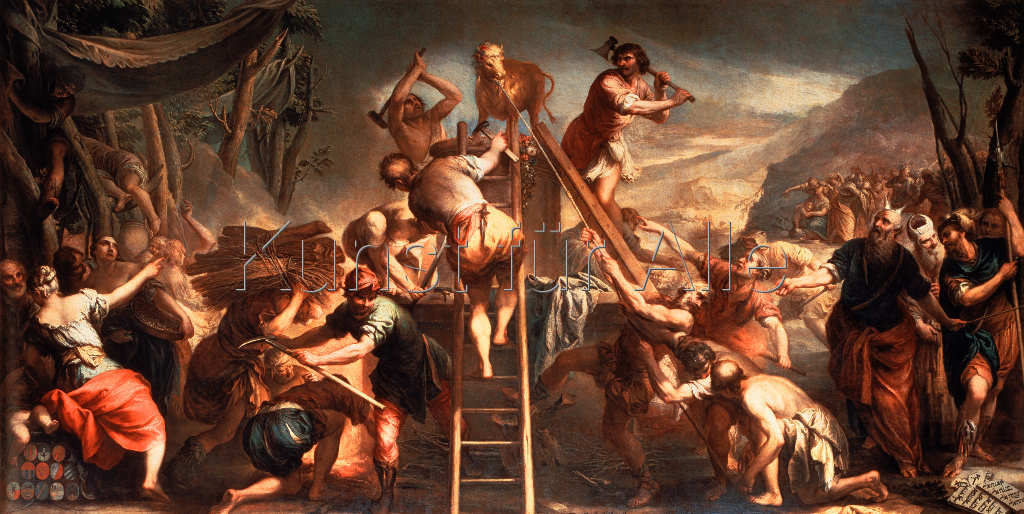
Moses Destroying the Golden Calf

Moses Destroying the Golden Calf (1680), oil painting on canvas by Andrea Celesti (1637-1706). Venice, Doge’s Palace, Sala della Quarantia Civil Vecchia.
(Click image to enlarge.)

First Reading (Track One): Exodus 32:1-14

Even if we do terrible things, even if we wallow in sin, God finds a way to forgive us in a banquet of loving grace. Hear this promise throughout his week’s readings, beginning with the startling story we hear first: The people, afraid that Moses won’t come back down from the mountain, gather all their gold as a sacrifice, shaping it into a golden calf, jettisoning their new commandments about images and idols. A righteously outraged God threatens to destroy the people and start all over. But Moses pleads their case, and God’s abundant love flows to a people who may not deserve it, but who will be forgiven over and over again.

First Reading (Track Two): Isaiah 25:6-9

In the context of the people’s relief from foreign domination after Israel’s earlier Assyrian exile, Isaiah exalts and praises a warrior God who destroyed the enemy while protecting the poor and needy. Then the narrative turns to a beautiful song of hope: In verses that we often hear as a reading in burial liturgy. we sing of a banquet that God will prepare, “a feast of rich food, a feast of well-matured wines … of rich food filled with marrow, of well-matured wines strained clear.” It will be a feast for the people of all nations, united at last in a kingdom where death and tears are no more.

Psalm (Track One): Psalm 106:1-6, 19-23

The Psalmist asks forgiveness for a people who have sinned, remembering God’s mercy even when they built and worshipped the golden calf, rejecting the great gift that they had just been given. They forgot God, their Savior, who had watched over them in Egypt and brought them safely across the Red Sea and through the desert. They deserved destruction, the Psalmist sings, but Moses stood up for them and turned God’s wrath aside, revealing the Lord who is good and forever merciful.

Psalm (Track Two): Psalm 23

Is there any more beloved song of God’s deep and abundant love than the 23rd Psalm? Our Good Shepherd is always with us, comforting us and protecting us, not only in the good times when we walk in the green pastures, but all the more in those frightening times when we must walk through the valley of the shadow of death. Just as Isaiah tells us of a banquet table set for the people of God, the Psalmist, too, sees a table of comfort spread out for us in the house of the Lord.

Second Reading: Philippians 4:1-9

Paul shows his pastoral side as he addresses an issue in his flock involving two women leaders in the church at Philippi, Euodia and Syntyche, who have been quarreling. Without taking a side, he urges them to “be of the same mind in the Lord.” In beautiful language, he shows what that might look like: “Rejoice in the Lord always; again I will say, rejoice.” Be gentle and kind; true, honorable and just, pure, pleasing, commendable and praiseworthy, he exhorts all the church, and the God of peace will be with us.

Gospel: Matthew 22:1-14

Here is yet another challenging parable. It’s easy enough for us to grasp the king’s anger at the people who didn’t show up for his son’s lavish wedding banquet, even if destroying the people and burning their city seems a bit harsh. And then, after he invited people off the street to take their place, he angrily ties up and throws out a man who ungratefully refused to put on a wedding garment. What’s going on here? Well, first, remember that we are still in Matthew’s narrative in which Jesus uses a series of parables to lecture an angry group of Pharisees. If there’s a deeper message as well, it may be that we need to follow Jesus fully, wedding garment and all.

What are “Track 1” and “Track 2”?
During the long green season after Pentecost, there are two tracks (or strands) each week for Old Testament readings. Within each track, there is a Psalm chosen to accompany the particular lesson.
The Revised Common Lectionary allows us to make use of either of these tracks, but once a track has been selected, it should be followed through to the end of the Pentecost season, rather than jumping back and forth between the two strands.
For more information from LectionaryPage.net, click here
.

Pentecost 19A

Thoughts on Today’s Lessons for Oct. 19, 2014

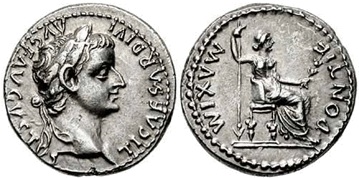
Denarius of Tiberius Caesar

A denarius of Tiberius Caesar, similar to the Roman coin that Jesus told the Pharisees to “give to the emperor.”

First Reading: Exodus 33:12-23


The people have survived the threat of a forgiving God’s destructive wrath. But now Moses worries that his troublesome flock might stray again. He asks God for assurance that God will continue to lead and guide the people. God agrees, but Moses wants more: He wants to see God in God’s glory. God warns that Moses dare not see God’s face. No human can see such glory and live. But a compromise emerges: Moses may stand in a crack in a rock, protected from danger, then open his eyes for a glimpse from behind after God passes by.

First Reading (Track Two): Isaiah 45:1-7

The people have been in exile in Babylon for 40 years, dreaming of their lost city and temple. Isaiah and the other prophets had warned them that they had no one but themselves to blame for their exile. They had failed to love their neighbor, forgotten to care for the weak and needy, and so broke the covenant with God that had brought them to the Promised Land. But now the Persians have conquered Babylon, led by the wise king that history knows as Cyrus the Great. Cyrus will send them home to Jerusalem. In celebration, the prophet praises the Gentile king as God’s own anointed.

Psalm: Psalm 99

The Psalmist celebrates this Exodus story, praising God for God’s justice and equity, remembering that God led the people in a pillar of cloud, answering the people’s prayers and, while justly punishing them when they strayed, forgave them in the end. Such a mighty God deserves praise and worship!

Psalm (Track 2): Psalm 96:1-13

Cyrus may have been a great king, but the Psalm quickly reminds us that God is king among all kings, before whom the whole Earth trembles. God created all things and will judge all things, fairly and with equity. Heaven and earth, thunder and lightning, all the fields and all the forest will rejoice when God comes to judge in righteousness and truth.

Second Reading: 1 Thessalonians 1:1-10

Paul praises this small community of former pagans in Thessalonika in Northern Greece, who had been persecuted for giving up the dominant religion. Their faith, Paul said, had inspired many converts, who were now waiting for Jesus to rescue them “from the wrath that is coming.” In this very early letter, written perhaps 20 years after the crucifixion, early Christians still hoped that Jesus would come back soon to judge the world and establish the kingdom of God on Earth.

Gospel: Matthew 22:15-22

This familiar story continues our recent narrative from Matthew: Jesus arrived in Jerusalem and quickly got in trouble, throwing the money changers out of the Temple. Now, in one encounter after another, he fences with the Pharisees who, in Matthew’s account, want to shut this trouble-maker down. They try to trap Jesus with a trick question, but he outwits them again, and in the process reveals that the temple leaders carry Caesar’s graven image on the coins in their purses. “Give to the emperor the things that are the emperor’s? How much do you suppose that might be? What then do we give to God?