
Illuminations on the Lectionary readings for June 7, 2026 (Pentecost 2A/Proper 5)
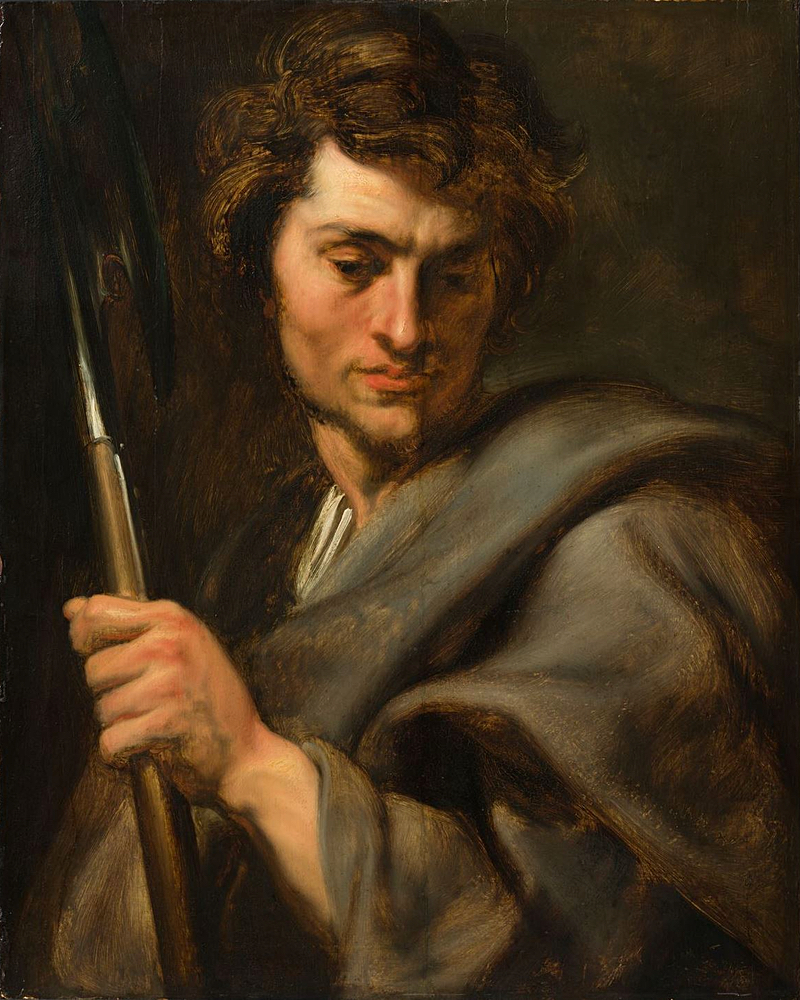
Matthew the Apostle (c.1618-1620), oil painting on panel by Anthony van Dyck (1599-1641). Rubenshuis, Antwerp, Belgium. (Click image to enlarge.)
First Reading (Track One): Genesis 12:1-9
Our liturgical colors are green again: The six-month-long stretch of Sundays after Pentecost will continue until Advent begins in November. Churches may follow either of two Lectionary tracks, each following a different set of First Readings and Psalms. In Track One, the first readings will follow the Hebrew Bible’s story of God’s chosen people, from the patriarch Abraham to Isaac, Esau and Jacob, Joseph, Moses and Joshua. In Sunday’s Track One first reading, we meet Abram, whom God will later rename Abraham. Even at the advanced age of 75, Abram’s faith empowers him to follow God’s challenging call to uproot his family and begin a long journey from his home in Ur (in present-day Iraq) toward the promised land. In return, God will bless Abram and his family, and through them, all the families of the Earth.
First Reading (Track Two): Hosea 5:15-6:6
Through the long stretch of Sundays after Pentecost that has now begun, churches may choose to follow either of two Lectionary tracks, with separate First Readings and Psalms. The Track Two first readings from the Hebrew Bible show a theme or theological point related in some way to the week’s Gospel. Sunday’s first reading in this track is from Hosea, who prophesied during the 8th century BCE, when Israel’s Northern Kingdom was under threat from the Assyrians. God has turned away in anger from the people, the prophet warns; not to return until they repent, acknowledge their guilt, and seek God’s face. In beautifully poetic terms, the prophet imagines God’s voice: “What shall I do with you, O Judah? Your love is like a morning cloud, like the dew that goes away early.”
Psalm (Track One): Psalm 33:1-12
Psalm 33 is a hymn of praise and thanksgiving for a just and faithful God who inspires the people’s songful worship and their fearful awe. The Psalmist sings of a God who loves righteousness and justice, who fills the Earth with steadfast love. Through God’s word, we hear, the heavens and earth and all that fills them were made: “He spoke, and it came to be. He commanded, and it stood firm.” Happy is the nation, the Psalmist sings, whose God is the Lord. Happy are those who are chosen as God’s heritage.
Psalm (Track Two): Psalm 50:7-15
Echoing God’s righteous anger against the people as prophesied by Hosea in the Track Two first reading, the portion of Psalm 50 that we read this Sunday warns that God has high expectations of the chosen people and will not hesitate to punish those who stray from the right path. The Psalmist imagines these fearful words: “O Israel, I will bear witness against you, for I am God your God.” How can the people do God’s will? Don’t sacrifice bulls and goats, the Psalmist advises worshipers at the ancient temple. Rather, offer a sacrifice of thanksgiving and make good your vows to the Most High.
Second Reading: Romans 4:13-25
As we begin this long season, we’ll take a deep dive into Paul’s Letter to the Romans that will continue into September. In this, his final letter, Paul was reaching out pastorally to a Christian community that he had not yet met. He hoped to reconcile tensions within a faith community that included both Jewish and Gentile Christians. At the time, Rome’s Jewish Christians had been exiled for several years and were just returning to a Gentile community that had gotten used to worshipping and administering the church community without them. Paul reminds them all that Abraham’s descendants received God’s promise under the law, while Gentiles who become Christians now receive it through their new faith. We are all children of Abraham and Sarah now, Paul assures them, through faith in Jesus’s death and resurrection.
Gospel: Matthew 9:9-13, 18-26
Having spent much of Lent and Eastertide hearing selections from John’s Gospel, we now return to Matthew for the remainder of the Lectionary year. Sunday’s Gospel tells of the calling of Matthew. Jesus had a bad reputation for hanging out with sinners, outcasts, and people the authorities considered suspicious: Prostitutes, drunks, and lepers; women, foreigners, and maybe worst of all, tax collectors, those despised collaborators who extracted the Roman Empire’s taxes from their neighbors. People like Matthew, who despite his outcast status as a tax collector hurried to follow Jesus … and invited him home for dinner. Then we hear Matthew’s account of Jesus healing a woman with a hemorrhage on his way to bringing a dead girl back to life. Both of these women would have been considered unclean under ritual law, but Jesus said, “Those who are well have no need of a physician.”
What are “Track 1” and “Track 2”?
During the long green season after Pentecost, there are two tracks (or strands) each week for Old Testament readings. Within each track, there is a Psalm chosen to accompany the particular lesson.
The Revised Common Lectionary allows us to make use of either of these tracks, but once a track has been selected, it should be followed through to the end of the Pentecost season, rather than jumping back and forth between the two strands.
For more information from LectionaryPage.net, click here.