
Illuminations on the Lectionary readings for June 21, 2026 (Pentecost 4A/Proper 7)
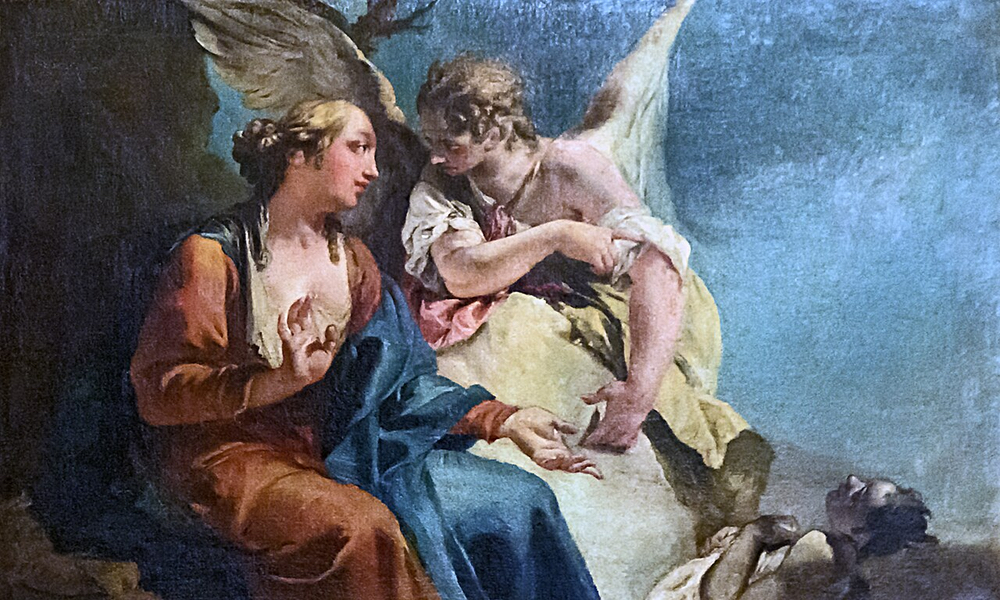
Hagar in the Desert (1687), oil painting on canvas by Giambattista Pittoni (1687-1767). Santa Maria Gloriosa dei Frari, Venice. (Click image to enlarge.)
First Reading (Track One): Genesis 21:8-21
Sometimes we turn to scripture for reassurance, looking for readings that bring us comfort and joy. Sunday’s readings are different: They challenge us, jolt our assumptions, and at the end, make us think about how our spirituality works. The Track One first reading offers a troubling story about Abraham, the patriarch of the chosen people. Abraham followed God’s commands with exemplary faithfulness, yet here we see him doing something disturbing as he sends his slave, Hagar, and their son, Ishmael, out into the desert to die. Happily, God intervenes, saving Ishmael and promising them a bountiful future parallel to that of Abraham and Sarah’s son, Isaac. Indeed, while Jews and Christians recognize Abraham as our patriarch through Isaac, the world’s Muslims trace their Abrahamic line through Ishmael.
First Reading (Track Two): Jeremiah 20:7-13
In Sunday’s Track Two first reading, we find the prophet Jeremiah angry and upset. God has called him to prophesy to the people that their failure to be righteous and just will bring destruction upon them, but they will not listen. Worse, they laugh and deride him when he shouts about their impending peril. Anger builds up in his bones like a burning fire, and he cannot hold it in. Even his close friends wait for him to stumble. But Jeremiah knows that it is his persecutors who will stumble, for God is with him like a warrior at his side.
Psalm (Track One): Psalm 86:1-10, 16-17
Like Hagar with Ishmael in the desert, the Psalmist in this portion of Psalm 86 suffers in misery. He suffers in distress despite his faith and trust in God. Recognizing that God is a God like no other, the God of all nations, who loves us even when we aren’t happy, he cries out his prayer in faith that a good and forgiving God will answer him and make his heart glad.
Psalm (Track Two): Psalm 69:8-11, (12-17), 18-20
The tone of lamentation in these selections from Psalm 69 rings in harmony with Jeremiah in the first reading. Like Jeremiah, the Psalmist spoke for God only to become the subject of scorn and reproach from his own friends and family. Even drunkards and loiterers at the city gate made up mocking songs about him! The Psalmist begs God to save him from their hatred, to turn to him in compassion and rescue him from his enemies.
Second Reading: Romans 6:1b-11
Everything in our lives changes in baptism: This reassuring theme runs like a thread through Paul’s letter to the Romans. Baptism unites us with Christ so that we share in his death and resurrection, Paul writes. In baptism, we symbolically die to our old life that was enslaved by sin, and through God’s abounding grace, become alive to new life through Jesus.
Gospel: Matthew 10:24-39
We love to imagine Jesus as the Prince of Peace, but now Matthew tells us that Jesus did not come to bring peace but a sword, to set family members against each other, and to call us to leave our families behind when we follow him. These disturbing verses, following Jesus’s stern instructions to the apostles in last Sunday’s Gospel, may reflect the difficult times when the evangelist we know as Matthew was writing his Gospel. The Roman Empire had crushed a Jewish rebellion, leaving Jerusalem shattered and the Temple in ruins. Jewish Christians were breaking away from Rabbinic Judaism amid angry disputes over Jesus’s status as Messiah. Under those circumstances, it would have been not only hard but dangerous to follow Jesus’s Way.
What are “Track 1” and “Track 2”?
During the long green season after Pentecost, there are two tracks (or strands) each week for Old Testament readings. Within each track, there is a Psalm chosen to accompany the particular lesson.
The Revised Common Lectionary allows us to make use of either of these tracks, but once a track has been selected, it should be followed through to the end of the Pentecost season, rather than jumping back and forth between the two strands.
For more information from LectionaryPage.net, click here.