
Illuminations on the Lectionary readings for Oct. 11, 2026 (Pentecost 20A/Proper 23)
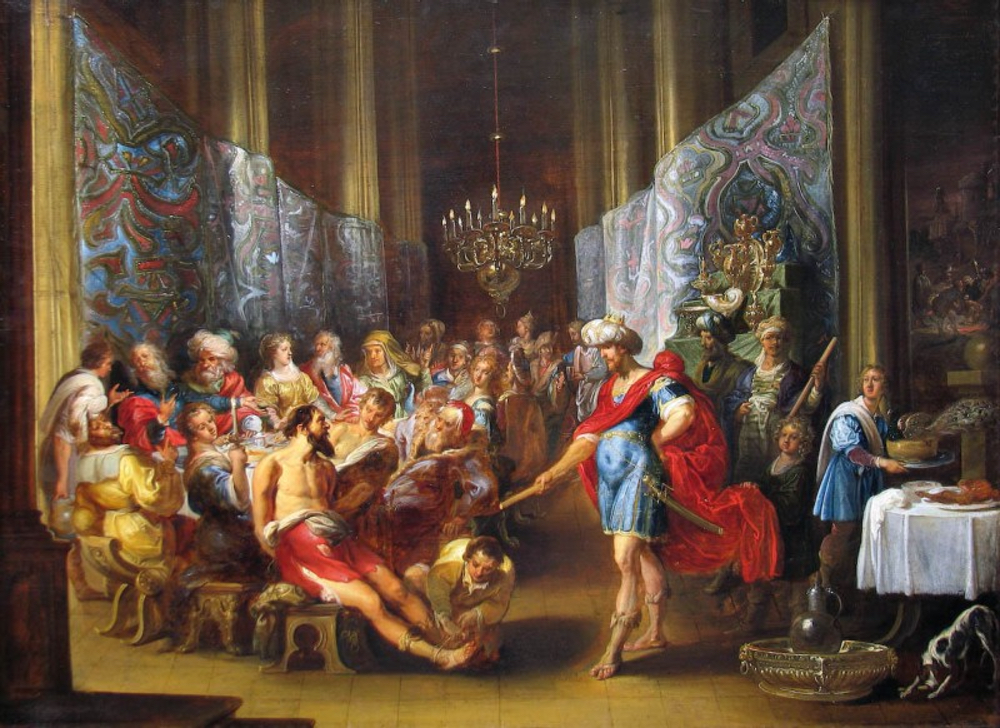
The uninvited wedding guest (1631), oil painting on panel by Vincent Malo (c.1602-1644). Muzeul Naţional Brukenthal, Sibiu, Romania. (Click image to enlarge.)
First Reading (Track One): Exodus 32:1-14
Even when we do terrible things, even when we wallow in sin, God finds a way to forgive us in a banquet of loving grace. This beautiful promise echoes through this week’s readings, beginning with the startling story we hear in this first reading: Moses is up on the mountain, talking with the Holy One, but things are going badly wrong below. The people, scared by Sinai’s smoke and thunder, are afraid that Moses won’t come back. It doesn’t take them long to break their brand-new covenant by worshipping a golden calf! God, righteously outraged, threatens to destroy the people and send Moses to start a new nation. But Moses pleads on the people’s behalf, and God relents. God’s abundant love flows to a people who may not deserve it, but they will be forgiven over and over again.
First Reading (Track Two): Isaiah 25:6-9
Prophesying in the context of Israel’s relief from foreign domination after its Assyrian exile, Isaiah offers a beautiful song of hope. In verses that we often hear as a reading in our liturgy for the burial of the dead, the prophet sings of a banquet that God will prepare: “a feast of rich food, a feast of well-matured wines … of rich food filled with marrow, of well-matured wines strained clear.” This is to be a feast for the people of all nations, united at last in a kingdom where God will put an end to death forever and wipe the tears from every face.
Psalm (Track One): Psalm 106:1-6, 19-23
The Psalmist asks forgiveness for a people who have sinned, remembering God’s mercy even when they built and worshipped the golden calf. They forgot God, their Savior, who had watched over them in Egypt and brought them safely across the Red Sea and through the desert. They deserved destruction, the Psalmist sings, but Moses pleaded for them and turned God’s wrath aside, revealing the Holy One who is good and forever merciful.
Psalm (Track Two): Psalm 23
Now, in the beloved 23rd Psalm, we sing of that very deep and abundant love, of God’s trusted protection. Our Good Shepherd is always with us, comforting us and protecting us not only in the green pastures and still waters of good times, but even in those frightening times when we walk through the valley of the shadow of death. Just as Isaiah envisions a banquet table set for the people of God, the Psalmist, too, imagines a table of comfort spread out in the house of the Holy One.
Second Reading: Philippians 4:1-9
In this passage Paul speaks to a specific pastoral issue that is troubling the church at Philippi. Two women, Euodia and Syntyche, have been quarreling in public. Without taking sides, Paul simply urges them to “be of the same mind” in Christ. In beautiful language, he shows what that might look like: “Rejoice in the Lord always; again I will say, rejoice.” Be gentle and kind, he exhorts all the church. Be true, honorable and just, pure, pleasing, commendable and praiseworthy, and the God of peace will be with us.
Gospel: Matthew 22:1-14
This parable might remind us of the wicked tenants in last week’s Gospel, who defied the person in charge and casually killed his messengers. As Jesus continues debating an angry group of Pharisees, he tells another strange and challenging parable: A king, angry at those who didn’t show up for his son’s wedding banquet – some of whom even killed the slaves sent to invite them – brings people off the street to take their places. Then, when one of these replacement guests ungratefully refuses to put on a wedding garment, he’s tossed out into the darkness, too. Even those invited as welcome guests, Jesus seems to say, are expected to don the wedding garment by following in his way.