
Illuminations on the Lectionary readings for Sept. 6, 2026 (Pentecost 15A/Proper 18)
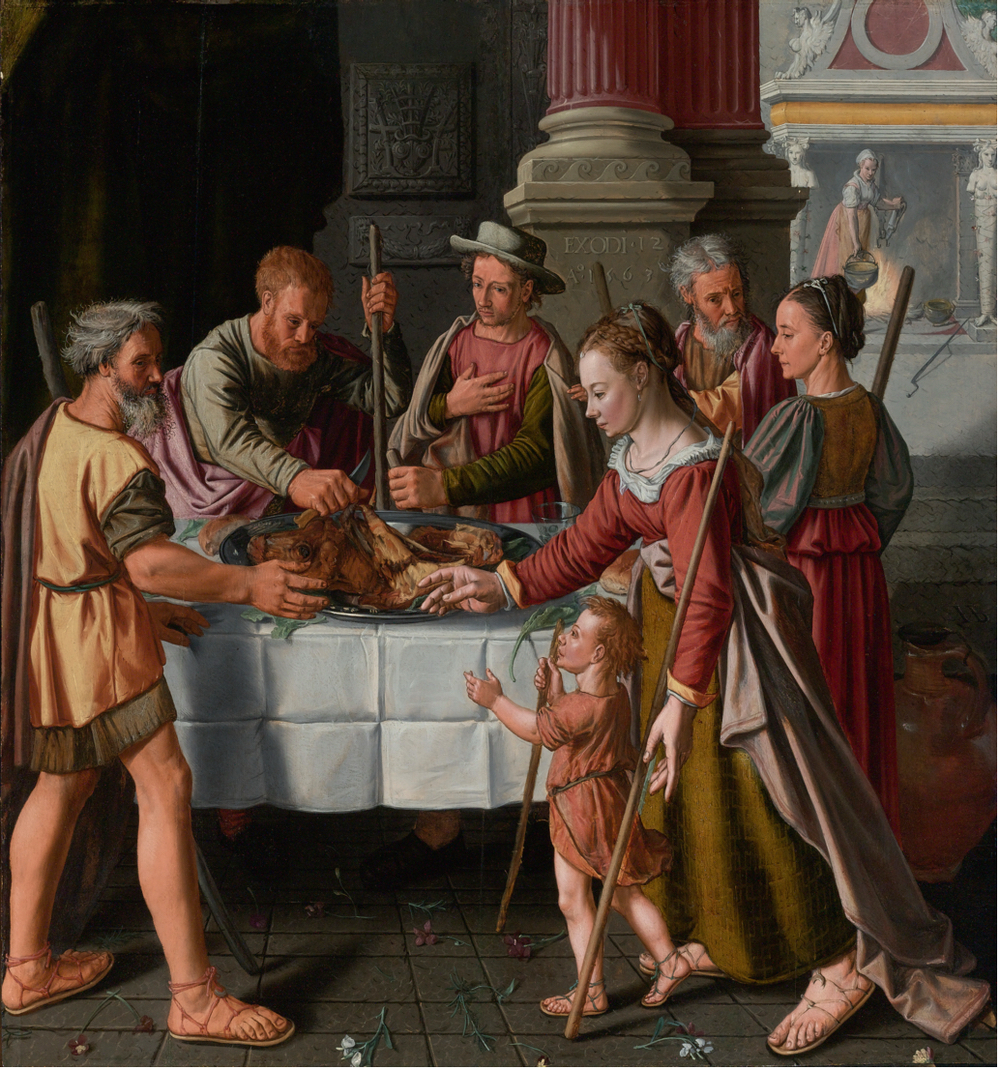
The First Passover (1562), oil painting on panel by Huybrecht Beuckelaer (1535-1605). Stichting Nederlands Kunstbezit, Maastricht, The Netherlands. (Click image to enlarge.)
First Reading (Track One): Exodus 12:1-14
God loves us. God is faithful to us. In times of turmoil and of fear, these simple ideas that we hear through Sunday’s readings offer reassurance. In the first reading, we see the origin of Passover: Having fought hard-hearted Pharaoh through a dozen plagues with God’s help, the people are now ready to escape from slavery in Egypt. But first they must be saved – literally by the blood of the lamb – from the bloody savagery that is about to strike the children and animals of Egypt and their pagan gods. The details of this gory sacrifice may belong to a different time and culture, but they reveal the grace through which God’s people march toward freedom.
First Reading (Track Two): Ezekiel 33:7-11
In this reading, we turn to the Prophet Ezekiel, who is identified in tradition as a priest who was exiled to Babylon six centuries before Jesus. During the wars that would eventually lead to the destruction of Jerusalem and the Temple, Ezekiel warned the people that God would punish them for their wickedness by taking away the covenant that had given them the promised land. In these verses, the prophet hears God’s warning that God does not want to punish the people, but desires that they save their lives by turning back – repenting – from their evil ways.
Psalm (Track One): Psalm 149
Psalm 149, like this week’s Exodus reading, celebrates warlike violence in language that reflects Bronze Age sensibility in the Ancient Near East. Yet we can hear its echoes all too well in the imagery of modern warfare, shock and awe. We sing to the Lord a new song, joyously dancing and shaking tambourines to celebrate God’s gift of victory in battle, while the enemy’s kings are bound in iron chains. Before we judge too harshly, recall that the Psalms, the Bible’s ancient hymnal, offer a full human range of emotion, from this warrior shout to the protective love of the Good Shepherd.
Psalm (Track Two): Psalm 119:33-40
Once more we sing a portion of Psalm 119, the longest of the Psalms, which turns up often in our Sunday readings. The entire Psalm celebrates Torah – God’s laws and teaching, the first five books of the Bible – as a glorious gift to humankind. Consistent with the theme of God’s love and protection that infuses this week’s readings, the Psalmist finds joy in knowing that the path of the commandments is the way of life.
Second Reading: Romans 13:8-14
The commandment to love one another incorporates all the commandments, Paul tells the Christians in Rome. Love, he says, in words that remind us of his beloved passage on love in 1 Corinthians, does no wrong to those around us. If we love our neighbors, we won’t hurt our neighbors. We won’t kill them, we won’t steal from them, we won’t be jealous of what they have. Love fulfills the law. Hoping that Christ would soon return – salvation grows nearer every day, he reminds them – Paul urges his flock to live honorably, not behaving badly or gratifying earthly desires, but by “putting on the Lord Jesus Christ.”
Gospel: Matthew 18:15-20
This Gospel reminds us of Jesus’s promise that we remember with joy whenever we approach the Communion table: He will be there among us, conscious of our deepest wishes, whenever we gather in his name, in prayer and in the real presence of the Eucharist. We also get a glimpse of the way that early Christians tried to work out disagreements through small group conversations before taking the matter to the full church for resolution only as a last resort. We’re probably relieved that we don’t sort out one another’s sins this way anymore, but let’s take note of a deeper message: When we gather together, in celebration or in conflict, Jesus is with us and shows us the way.