
Illuminations on the Lectionary readings for Aug. 30, 2026 (Pentecost 14A/Proper 17)
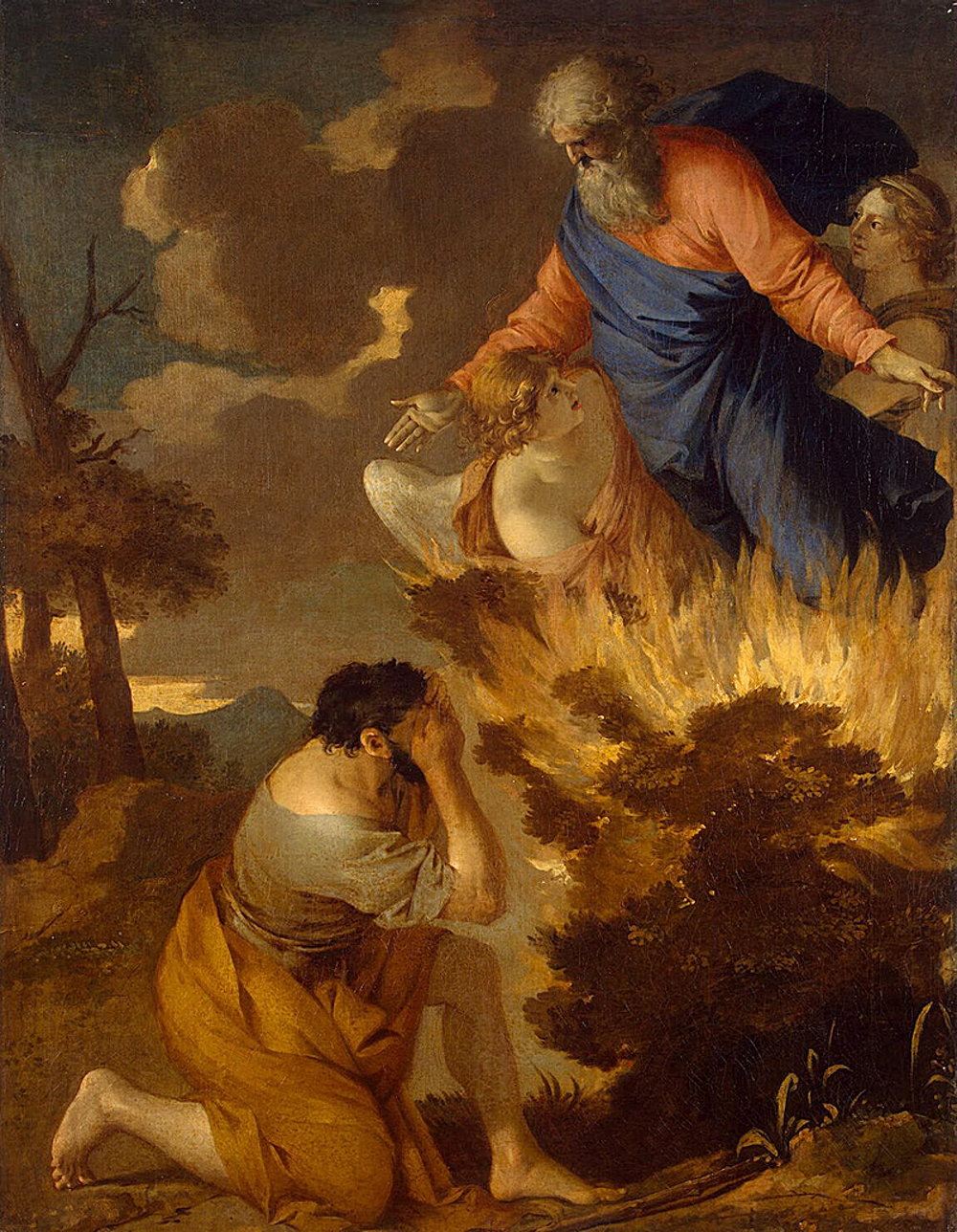
The Burning Bush (c.1643), oil painting on canvas by Sébastien Bourdon (1616-1671). Hermitage Museum, St. Petersburg, Russia. (Click image to enlarge.)
First Reading (Track One): Exodus 3:1-15
The Lectionary account of the people’s long journey from enslavement in Egypt toward freedom in the promised land now begins. Moses encounters God in the form of a burning bush on Mount Horeb. This is another name for Mount Sinai, where Moses will later return to receive the Ten Commandments and enter the people into covenant with God. The God of the patriarchs Abraham, Isaac and Jacob, too powerful to view face to face, occupying holy ground, tells a somewhat reluctant Moses that he is to lead the people out of Egypt. Then Moses asks a curious question: What is God’s name? “I am who I am,” God replies. “Say to the Israelites, ‘I am’ has sent me to you.”
First Reading (Track Two): Jeremiah 15:15-21
The youthful prophet Jeremiah’s sometimes angry, frequently despondent prophecies have earned him the nickname “Weeping Prophet.” We hear a little of both emotions in Sunday’s Track Two first reading. Jeremiah confronts God and begs him to bring down retribution on those who are persecuting him. He spoke out on God’s behalf, Jeremiah declares, even though it was hard, but those ungrateful people only insulted him. “Why,” he wails, “is my pain unceasing, my wound incurable, refusing to be healed?” God responds with kindness, reassuring him: “they will fight against you, but they shall not prevail over you, for I am with you to save you and deliver you.”
Psalm (Track One): Psalm 105:1-6, 23-26, 45c
Echoing the theme of the first reading from Exodus, this Psalm of thanksgiving and praise remembers the people’s descent from Abraham, Isaac, and Jacob and their sojourn as aliens and oppressed slaves in Egypt. When we sing praise for Moses’ service in protecting the people so they might observe God’s laws, we celebrate the survival of not just dry legislation but of Torah, God’s timeless teaching that guides the way we live.
Psalm (Track Two): Psalm 26:1-8
One might wonder if Jesus had Psalm 26 in mind when he made an example of a Pharisee who boasted loudly of his righteousness when he prayed. The Pharisee thanked God that he was not like the thieves, rogues, adulterers, and tax collectors he saw around him. It would be easy to read that kind of prideful piety into these verses, too. But listen to them instead with the perspective of Jeremiah’s call for God’s grace, and envision a God whose lovingkindness inspires us to worship with thanksgiving and songful procession, loving the place where God’s glory abides.
Second Reading: Romans 12:9-21
We have journeyed with Paul in his letter to the people of Rome on the Sundays after Pentecost since June. We have listened and learned as Paul worked out a new theology, discerning how we receive new life in God’s grace through Christ. Now we are approaching the end of this letter. During the next three weeks we will hear him conclude with a beautiful, poetic summary of his call to Rome’s Jewish and Gentile Christians to live together in love. “Hate what is evil, hold fast to what is good; love one another,” he writes in this passage. “Do not be overcome by evil, but overcome evil with good.”
Gospel: Matthew 16:21-28
In last week’s Gospel we heard Jesus praise Peter, calling him the rock upon which he would build a church. Now, in the verses that immediately follow, Jesus tells the apostles that he will have to suffer, die and be raised again. Peter angrily objects, prompting Jesus to turn and declare Peter “Satan,” ordering him out of his sight. The evangelist we know as Matthew, perhaps reflecting evolving Christian theology a generation or two after the crucifixion, depicts a powerful image of Jesus as Messiah, predicting his own death and resurrection as necessary steps toward the universal justice that will come with God’s kingdom.