
Illuminations on the Lectionary readings for Aug. 16, 2026 (Pentecost 12A/Proper 15)
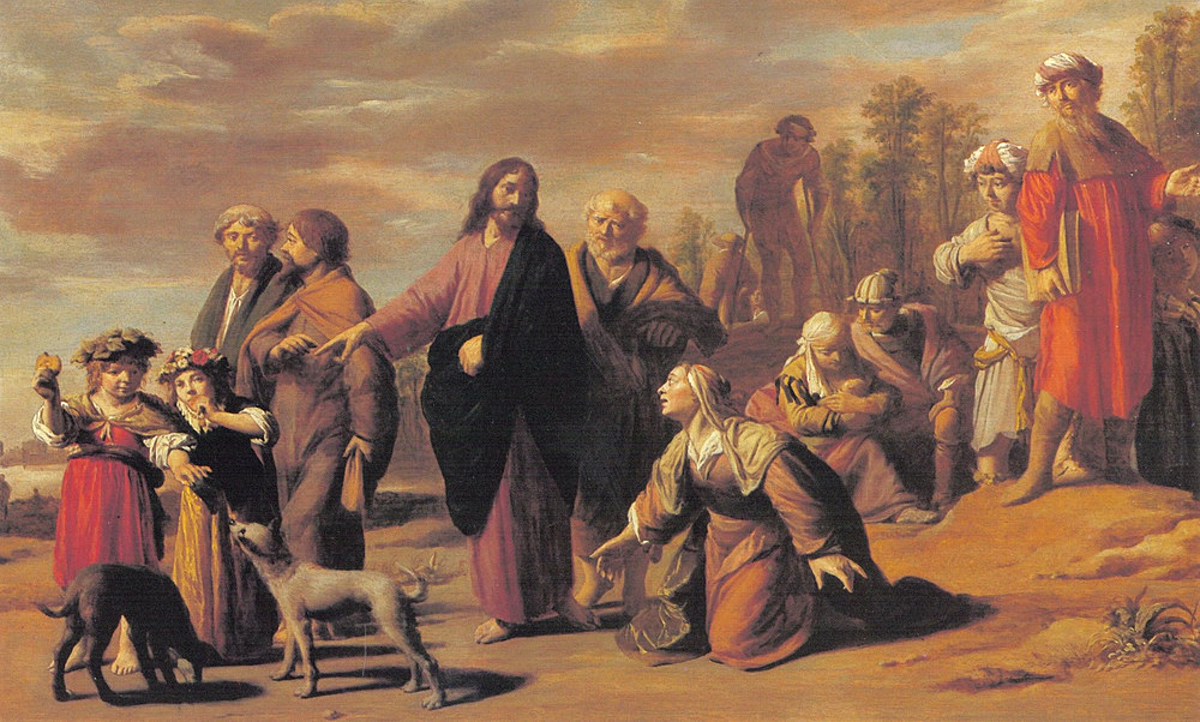
Christ and the Canaanite woman (1645-1650), oil painting on panel by Willem van Oordt (active c.1635-c.1655). Museum Catharijneconvent, Utrecht, Netherlands. (Click image to enlarge.)
First Reading (Track One): Genesis 45:1-15
Thoughts of generous mercy recur in Sunday’s readings as our lectionary narratives near the midpoint of the season after Pentecost. This first reading marks the last in the long series of ancestral stories we have heard about Abraham, Isaac, Jacob, and Joseph. The Gospel finds Jesus and the apostles leaving Galilee for the last time as they begin their journey through the country of strangers, traveling toward Jerusalem and the cross. In the first reading, Joseph, whose jealous brothers had sold him into slavery in Egypt, has become Pharaoh’s chief governor. Now his brothers have come to Egypt fleeing famine in Israel. When they encounter their now powerful brother, they quite sensibly fear his revenge! But Joseph forgives them in a tearful reunion, and the ancestral line of the Bible’s patriarchs will live on as God had promised.
First Reading (Track Two): Isaiah 56:1,6-8
In this first reading, we turn to the closing chapters of Isaiah’s long book of prophecy. The people have returned home to Jerusalem, and now they face the arduous task of rebuilding the city and the temple. Isaiah reminds the people that, just as they lost the land for their failure to be righteous and just, they may no longer keep the holy city for themselves alone, even if they “maintain justice and do what is right.” The covenant that God made with Moses now extends to all people, to all the nations, Isaiah prophesies. Even foreigners who hold fast to the covenant’s principles will be gathered in, welcomed in the temple, and made joyful.
Psalm (Track One): Psalm 133
Showing exuberant joy that might remind us of Joseph’s ultimately happy reunion with his brothers, the Psalmist celebrates the blessed state of brothers and sisters abiding together in unity. Just as Joseph’s family came back together in love, and just as Paul in the second reading will urge the Jewish and Pagan Christian communities in Rome to rejoin in friendship, we hear how good and pleasant it is when families and friends live together in blessed unity.
Psalm (Track Two): Psalm 67
We hear Psalm 67 again, just three months after it was selected for use during Eastertide. It fits in neatly with Sunday’s readings: In its joyous call to all the nations of Earth to sing together in peace and praise, it reinforces what we heard in the Isaiah reading, and it foreshadows Paul’s words to the Romans. Let all the nations praise God and pray for God’s blessing, the Psalmist tells the people; for through God the Earth gives forth its bounty, and all the earth sings out its praise.
Second Reading: Romans 11:1-2a, 29-32
Paul continues his exhortation to Rome’s Jewish Christian and Gentile Christian communities, urging them to restore the unity that they enjoyed before the Jewish portion was sent away in exile. Paul declares his own Jewish heritage, placing himself in Abraham’s direct line as a descendant of Benjamin, the youngest of Joseph’s brothers, whom Joseph loved. Paul assures us that God’s promises to Israel and to the Gentiles are equally irrevocable, regardless of our disobedience: We all earn God’s love, regardless of our sins, regardless of our ancestry. God is merciful to all.
Gospel: Matthew 15:10-28
Sunday’s Gospel offers us two separate short stories. The first describes Jesus’s last encounter with the crowds that have been following him in Galilee. The next tells of his first healing in Gentile territory as he and the apostles begin their journey to Jerusalem. In the first event, Jesus mocks a group of Pharisees who had challenged his disciples for ignoring ritual traditions. He speaks a blunt and rather earthy criticism: Neglecting to wash our hands before eating doesn’t defile us, but the words that come out of our mouths may do so. In the next encounter, Jesus shocks us with a fiercely unkind insult, likening a Canaanite woman who sought help for her daughter to stray dogs scrounging for crumbs. But the words that emerge from the mother’s mouth clearly come from her heart. The meeting seems to change Jesus, as he praises her faith and heals her child.