Maundy Thursday

Illuminations on the Lectionary readings for April 14, 2022 (Maundy Thursday)

Christ Washing the Disciples' Feet (

Christ Washing the Disciples’ Feet (1548-1549), oil painting on canvas by Tintoretto (1519-1594). Museo del Prado, Madrid. (Click image to enlarge.)

Exodus 12:1-4, (5-10), 11-14 [The first Passover]

Psalm 116:1, 10-17 [O Lord, I am your servant]

1 Corinthians 11:23-26 [This is my body that is for you]

John 13:1-17, 31b-35 [Jesus knew that his hour had come]

Palm / Passion Sunday C

Thoughts on Sunday’s Lessons for April 10, 2022 (Palm / Passion Sunday C)

The Liturgy of the Palms C

Gospel: Luke 19:28-40

Palm Sunday and Passion Sunday fall on the same day in modern times, prompting us to watch in shock and surprise as the crowds who cheered for Jesus upon his arrival in Jerusalem quickly turn to mocking him and calling for his crucifixion.

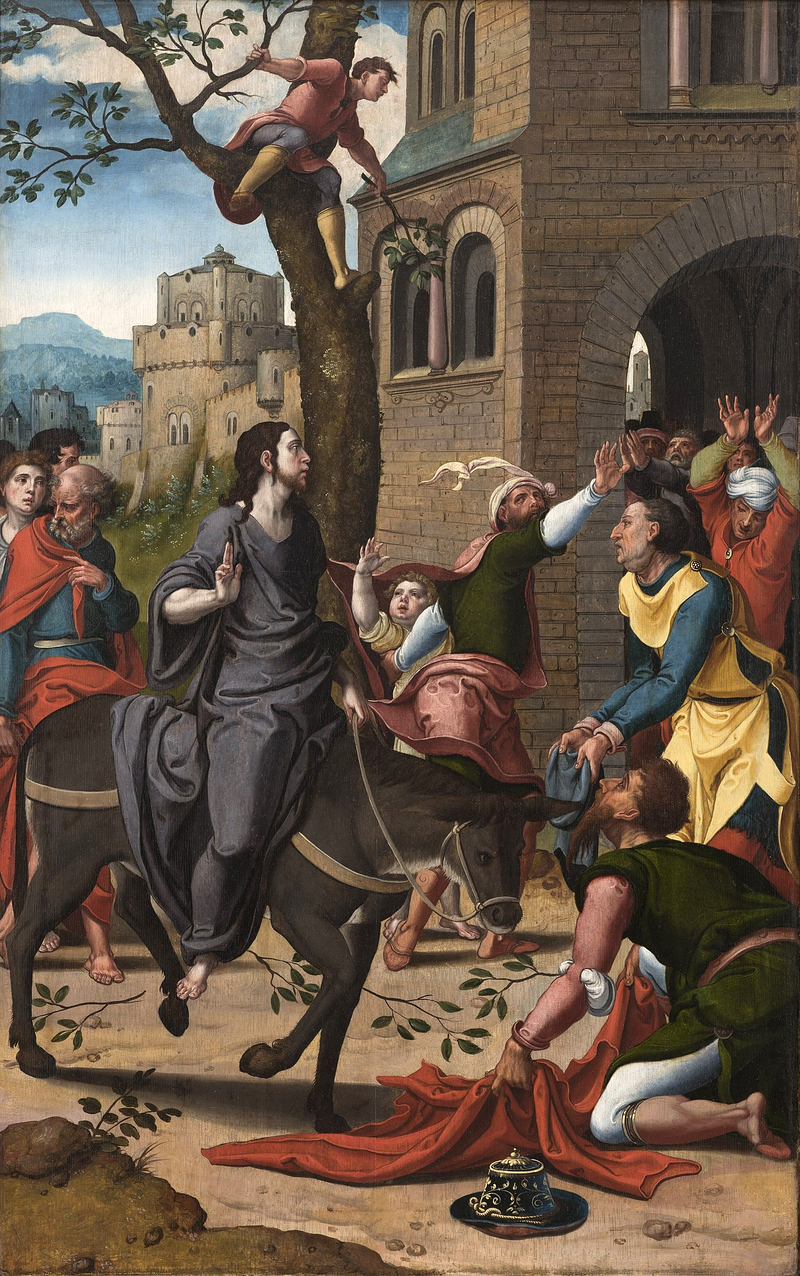
Entry of Christ into Jerusalem

Entry of Christ into Jerusalem (c.1530), oil painting on panel by Pieter Coecke van Aelst (1502-1550). Bonnefanten Museum, Maastricht, Netherlands. (Click image to enlarge.)

First, in the Liturgy of the Palms, we celebrate and wave our palms as Jesus rides a colt into Jerusalem while the crowd chants the words of the prophet Zechariah celebrating the arrival of Israel’s king: “Rejoice greatly, O daughter Zion! Shout aloud, O daughter Jerusalem! Lo, your king comes to you; triumphant and victorious is he, humble and riding on a donkey, on a colt, the foal of a donkey!” Then Luke shows the crowd responding with a song of joy that we’ll hear again in Psalm 118: “Blessed is the one who comes in the name of the Lord!”

Psalm: Psalm 118:1-2, 19-29

This resounding ancient hymn, a song in celebration of victory, rings out in harmony with the first reading’s verses of celebration of Jesus’ arrival in Jerusalem. Imagine a joyful crowd at the gates to the ancient Temple, clapping hands and loudly singing, praising the Lord, our God, whose mercy and steadfast love endure forever. “On this day the Lord has acted; we will rejoice and be glad in it.”

The Liturgy of the Passion C

First Reading: Isaiah 50:4-9a

Now our readings turn darker and more painful as Holy Week draws near. But even as shadows and twilight fall, the hope that rests in faith and trust remains. The Prophet Isaiah surely meant the “Suffering Servant” figure as a metaphor for Israel under the iron foot of exile, hoping some day to return home with God’s help. Christians must respect this tradition, but the Servant’s pain may make us think of Jesus too, particularly in its clear call to turn the other cheek against our enemies, knowing that God is with us.

Psalm: Psalm 31:9-16

The darkness deepens as we hear this Psalm. These verses that echo the pain of the Suffering Servant remind us that numbing anguish can sap the strength of body, mind and soul. But even in the darkest depths, hope remains! Even when life seems full of pain and void of hope, we trust in God and pray: “Let your face shine upon your servant; save me in your steadfast love.”

Second Reading: Philippians 2:5-11

When Paul wrote this letter from a prison cell in Rome, he may have had Isaiah’s Suffering Servant in mind. In poetic verses that historians believe may have been taken from an early Christian hymn, Paul tells us that Jesus “emptied himself” as a human, even a slave, becoming one with us even in suffering. Jesus took on human frailty as he bore the gruesome pain of crucifixion. With this as our model, Paul shows that all are called to serve God and our neighbor humbly and obediently, becoming “more” through being “less.”

Gospel: Luke 22:14-23:49

Now the joy and celebration of the procession with the palms is fully turned. We see Jesus and his friends at the Last Supper, and now the crowds who had cheered for Jesus are mocking him and calling for his crucifixion. Before long we listen in horror to the familiar account of Jesus’ torture and gruesome death. In the midst of it all, though, take a moment to reflect on a brief passage at the Last Supper when Jesus turns the disciples’ bold ideas upside down after they started arguing about which of them was to be the greatest: “The greatest among you must become like the youngest,” Jesus tells them, “and the leader like one who serves.” What direction might we take from this? How are we called to serve?

Palm / Passion Sunday B

Thoughts on Today’s Lessons for March 29, 2015

Procession: Liturgy of the Palms B
Jesus Enters Jerusalem.

Jesus Enters Jerusalem. 18th century icon in the Greek Catholic Cathedral of Hajdúdorog, Hungary.

Gospel: Mark 11:1-11

It’s Palm Sunday, and it is Passion Sunday. In the course of our worship, we hear of Jesus’ triumphal entry into Jerusalem, riding a donkey and greeted as a King by throngs shouting “Hosanna!” But then, almost before we know it, we hear those same crowds angrily shouting “Crucify him!” How can this sudden and dramatic change occur? Hold this thought as we begin Holy Week, walking with Jesus toward the Cross: God is with us in joy. God is with us in sorrow.

Psalm: Psalm 118:1-2, 19-29

This Psalm, thought to be an ancient “song of ascents” chanted in procession as worshippers approached the Temple, is an occasion for hosannas, too. It sings out joyous praise for God’s works and God’s mercy in words that we adopt in our Eucharist in the Great Thanksgiving: “Blessed is the one who comes in the name of the Lord! … Hosanna in the highest …”

Liturgy of the Passion B

First Reading: Isaiah 50:4-9a

It is difficult for Christians to consider Isaiah’s “Suffering Servant” without imagining Jesus, who suffered for us, turned his cheek against attacks, and surely faced the insults and spitting of his foes. It’s important to remember, though, that the Prophet Isaiah had an entirely different image in mind, imagining a servant leader who would take the enemy’s blows for the people in exile, and, eventually, guide them back home.

Psalm: Psalm 31:9-16

Perhaps the Psalmist had Isaiah’s Suffering Servant in mind as he wrote this Psalm of lament, with its litany of sorrow, distress, grief, sighing, misery, scorn, horror, dread and fear of death. And yet, even in the face of this crushing pain, we place our trust in God, We place our faith in God’s love, and we wait for the light of God’s face to shine through like the sun.

Second Reading: Philippians 2:5-11

These familiar, poetic verses boast a fascinating background: Scholars believe that they were sung as a hymn in the early church. It may be the most ancient Christian hymn that we have! Moreover, it carries significant theological weight: Although Jesus was truly God as well as truly human, he chose to “empty himself,” taking on the full weight of his suffering, accepting human weakness even as he bore the pain of crucifixion. Then God lifted him up, exalted his name and calls us to declare that Jesus Christ is Lord.

Gospel: Mark 14:1-15:47

And at last we come to Mark’s account of Jesus’ passion and death. The palm branches and hosanna shouts are only a memory now, as we turn to the dark, painful way of the Cross and prepare to be with Jesus through Holy Week. Let us be attentive as we see Jesus’ followers, then his friends, desert him, leaving at the end only those closest to him – and a Roman centurion whose faith showed him the light!

Palm / Passion Sunday A

Thoughts on Today’s Lessons for Sunday, April 13, 2014

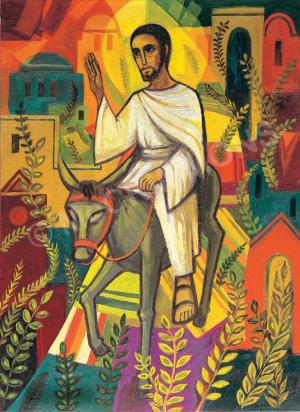
Jesus enters Jerusalem on a donkey. (From ProgressiveInvolvement.com)

Jesus enters Jerusalem on a donkey.

Procession: Liturgy of the Palms A

Psalm: Psalm 118:1-2, 19-29
As we celebrate Palm Sunday, recalling Jesus’ traditional entry into Jerusalem before a cheering crowd, these verses from Psalm 118 portray another festive procession in honor of our Lord and God; in familiar words we celebrate “the day that the Lord has made; let us rejoice and be glad in it!”

Gospel: Matthew 21:1-11
Matthew tells of Jesus’s triumphal procession into the city, complete with the odd image of Jesus riding two animals at once, recalling Zechariah’s prophecy that Israel’s shepherd-king would come, “mounted on a donkey, and on a colt.” It is an exciting time: Crowds surround Jesus, and he has warned the disciples that he will be mocked, flogged and crucified. Soon he will anger the authorities again when he drives the money-changers out of the temple, as the narrative leads inexorably to his passion and death on the cross.

Liturgy of the Passion A

First Reading: Isaiah 50:4-9a
This song of the Prophet Isaiah is called “the suffering servant.” Written about the people in exile in Babylon, it looks forward to a servant leader who will guide them back home to Jerusalem. Christian readers can hardly encounter these verses, though, without thinking of Jesus, our messiah and king, who suffered for us and who taught us to give our backs and turn our cheeks to those who strike us.

Psalm: Psalm 31:9-16
Suffering continues in this Psalm of lament, as the Psalmist recites a litany of sorrow, distress, grief, sighing, misery, scorn, horror, dread and more. He suffers, his neighbors scheme; they plot his death. Yet amid all this misery, hope glows like the sun breaking through clouds: Trust in God, place our faith in God’s love, and wait to be saved.

Second Reading: Philippians 2:5-11
Might Paul have had Isaiah’s “suffering servant” in mind as he wrote of Jesus’ death on the cross? We understand Jesus as both fully human and fully divine, yet he was willing to set aside his divinity – “emptying himself” – to bear the horrific pain of crucifixion as a vulnerable, frightened human. Jesus took on the full weight of all that suffering to show us the true exaltation of God’s love, calling us only to respond with love for God and our neighbor.

Gospel: Matthew 26:14 – 27:66
There’s a lot packed into this long Gospel, from the Last Supper to the crucifixion; but let’s focus for a moment on just one point: When Jesus warned the apostles that one of them would betray him, they all fretted. Every one wondered if he could turn traitor. One after another they asked, ‘Surely not I, Lord?” No matter how much we think we love, deep inside we worry. Like the apostles, we all know we are human, frail and weak. Yet Jesus, taking up the cross for our sake, loves us all the same.

Palm / Passion Sunday C

Thoughts on Today’s Lessons for Sunday, March 24, 2013.

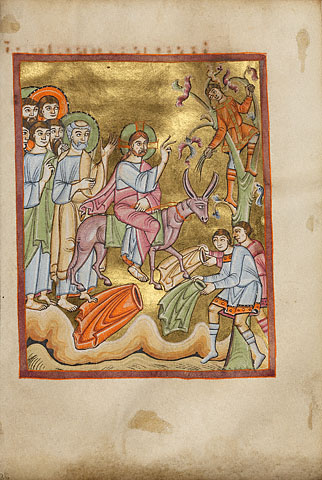
The Entry into Jerusalem, unknown artist, Ottonian, Regensburg, about 1030 - 1040.

The Entry into Jerusalem

Procession: Liturgy of the Palms C

Gospel: Luke 19:28-40
Jesus rides a colt into Jerusalem on the first Palm Sunday, an allusion to the prophet Zechariah that wouldn’t have been lost on the Jewish throngs: “Rejoice greatly, O daughter Zion! Shout aloud, O daughter Jerusalem! Lo, your king comes to you; triumphant and victorious is he, humble and riding on a donkey, on a colt, the foal of a donkey.!” The Roman rulers and Jewish authorities wouldn’t have been happy about that, but the crowds, says Luke, responded with a song of joy right out of Psalm 118: “Blessed is the one who comes in the name of the Lord!”We repeat this song of praise every time we celebrate the Eucharist.

Psalm: Psalm 118
As we read these verses, which are thought to be an ancient collection of Temple songs of celebration and praise titled “A Song of Victory,” imagine a joyous crowd clapping hands and singing loudly. celebrating the Lord their God, whose steadfast love endures forever.

Liturgy of the Passion C

First Reading: Isaiah 50:4-9a
Grief and pain fill our readings as Holy Week comes near; but there is hope here, too, the hope that lies in faith and trust. To the ancients, Isaiah’s Servant figure probably stood for Israel suffering in exile in hope of returning home with God’s help. It’s not hard for Christians to find Jesus symbolism here, though, particularly in the prophet’s clear call to turn the other cheek against our enemies, knowing that God is with us.

Psalm: Psalm 31:9-16
If you’ve ever suffered from serious depression or known and loved anyone who has, you’ll see that the Psalmist deeply understands this numbing anguish that can sap the strength of body, mind and soul. But even in the black depths, there’s hope! Even when things seem darkest, trust in God and pray: “Let your face shine upon your servant; save me in your steadfast love.”

Second Reading: Philippians 2:5-11
Paul, writing to the people of Philippi from prison in Rome, might very well have had Isaiah’s Servant in mind as he wrote. Jesus’s death on the cross is significant, Paul says, because Jesus “emptied himself,” becoming one with us even in suffering, accepting human frailty as he bore the gruesome pain of crucifixion. We, too, like Paul, are called to serve God and our neighbor in the name of Jesus, who became “more” through becoming ‘less.”

Gospel: Luke 22:14-23:49
Palm Sunday brings us to Holy Week with Luke’s full account of Jesus’s Last Supper, Passion and Crucifixion. And now Jesus, too, calls us to service: “The greatest among you must become like the youngest, and the leader like one who serves. … But I am among you as one who serves.” What might this look like in your life? How are you called to serve?