
Illuminations on the Lectionary readings for Aug. 2, 2026 (Pentecost 10A/Proper 13)
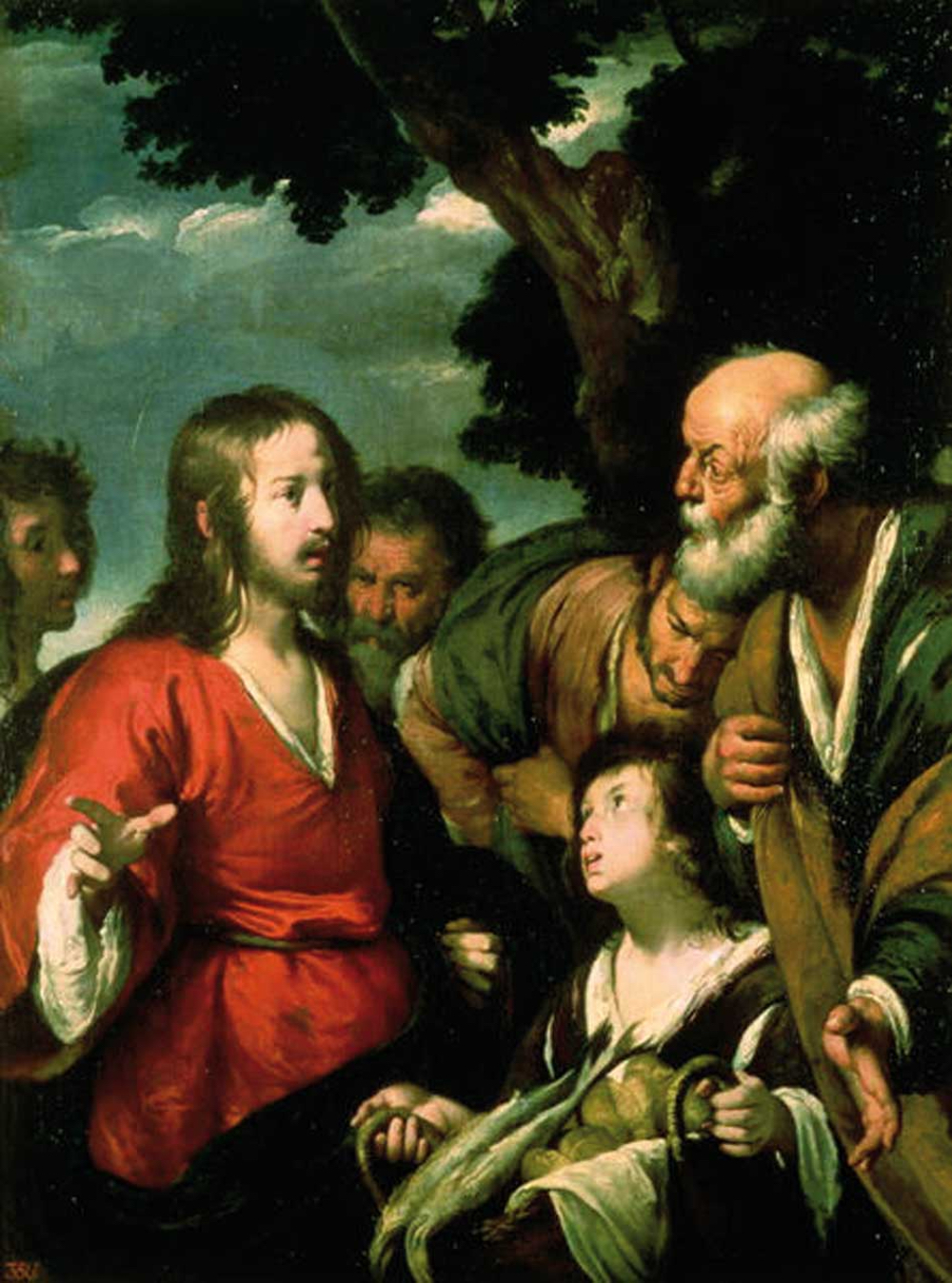
The Miracle of the Five Loaves and Two Fishes (early 1600s); painting by Bernardo Strozzi (1581-1644). Private collection. (Click image to enlarge.)
First Reading (Track One): Genesis 32:22-31
We meet Jacob again in this first reading, continuing a theme that we’ve been following for several weeks. Once again, this notorious trickster confronts a force that proves stronger than he is, and yet, he wins. Or does he? Jacob, who saw God in a dream of angels going up and down a heavenly ladder at Bethel, now meets God’s angel in another dream. He struggles mightily against this mysterious foe and earns a new name, Israel – “who struggles with God.” Jacob, now Israel, comes of age in the understanding that God is not just somewhere out there in a distant universe but can be found right here with us in our daily lives, where we ask hard questions and even struggle with God.
First Reading (Track Two): Isaiah 55:10-13
In this first reading, we hear some of the final verses written by the second of the three ancient prophets whose work Bible scholars believe has been consolidated into a single Isaiah figure in this memorable book of prophecy. The overall narrative of the book tells of the chosen people’s loss of Jerusalem and the Temple; their exile to Babylon; and their eventual return home to Jerusalem, where they build a restored temple. In these verses, having assured the people that God has forgiven their failures of justice, Isaiah paints a beautiful image of God as the giver of life and sustenance and all that is good.
Psalm (Track One): Psalm 17: 1-7, 16
God remains faithful to the people of Israel, even when they struggle, even when they fail: In these reassuring verses, the Psalmist celebrates God’s faithful, steadfast love. This special kind of love is so sure and certain that there’s a specific Hebrew word for it – “chesed” – a term rich with connotations of faith, loyalty, care, and grace. The Psalmist reminds us that God loves us and will protect us when we seek refuge.
Psalm (Track Two): Psalm 145: 8-9, 15-22
The Psalms incorporate a wide variety of genres: hope, lament, petition, and praise. It is a diverse anthology in which we can find the many ways that God’s people approach the divine in worship and song. The final six Psalms in particular, beginning with Psalm 145, conclude the book with songs and shouts of praise. The two segments chosen for this reading celebrate the graciousness and compassion of God, who satisfies every living creature’s needs and stands near to all who call.
Second Reading: Romans 9:1-5
In the portion that we read last week, Paul reminds the ancient Christian community in Rome that nothing can separate us all from God’s love through Jesus. Now Paul recalls how God has remained faithful to the descendants of Abraham. Paul declares that he, like all Israel, has inherited God’s covenant and commandments “through the flesh” of family heritage. Now, in this letter focused on urging Rome’s Gentile and Jewish Christians to learn to love and accept one another, he declares that all who follow Jesus become children of God through the Spirit.
Gospel: Matthew 14:13-21
The story of Jesus feeding the multitude by multiplying a few loaves and fishes is so beloved that it’s repeated in varying forms in all four Gospels. The notion that many in the crowd shared their own supplies to supplement the feast rings true to anyone who’s ever indulged in a church potluck. But then, so does the simple symbolism of God’s faithful abundance … and of Jesus taking bread and feeding the community. But ponder these words of Jesus: “They need not go away; you give them something to eat.” Can we hear an echo of Jesus saying, “I was hungry and you gave me food … just as you do it to one of the least of these, you do it to me”?