
Illuminations on the Lectionary readings for March 15, 2026 (Lent 4A)
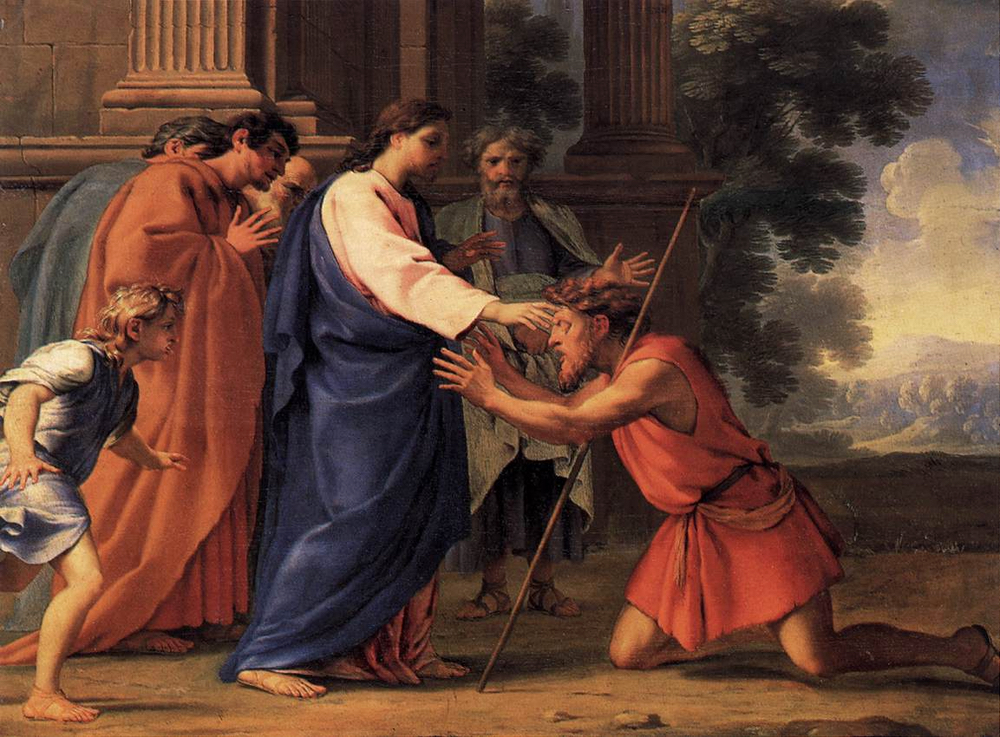
Christ Healing the Blind Man (c.1645), oil painting on panel by Eustache Le Sueur (1616-1655). Prussian Palaces and Gardens Foundation Berlin-Brandenburg. (Click image to enlarge)
First Reading: 1 Samuel 16:1-13
Our Lectionary readings during Lent have invited us to reflect on light and sight: What do we see, and how do we see it? In Sunday’s first reading for the Fourth Sunday of Lent, we hear that God has rejected Saul as king of Israel. Now God directs Samuel to take on the risky chore of finding a successor. Samuel is fearful of Saul’s anger, but he follows God’s command to go to Jesse the Bethlehemite, among whose eight sons God has chosen the next king. Samuel examines seven of the young men, one at a time, but none seems to be the chosen one. Asking if there is any other, Samuel discovers David, Jesse’s youngest son, who had seemed such an unlikely choice that he had been sent to watch the sheep while Saul examined his older brothers. But God saw the spirit in David that the others could not detect, and David would become king.
Psalm: Psalm 23
The 23rd Psalm is beloved with good reason: Its familiar verses bring comfort in times of trouble and trial, reminding us that in our darkest hours and most threatening times, God walks with us, protects us, and comforts us. Ancient tradition held that David himself wrote these verses. Most modern scholars doubt that. But kings and commoners alike can take joy from knowing that God’s rod and staff comfort us, and God’s goodness and mercy follow us all the days of our lives.
Second Reading: Ephesians 5:8-14
This short letter to the people of the church in Ephesus was probably actually written by a follower in Paul’s name a few decades after his death. The full epistle contains some problems for modern Christians who take it out of its historical and cultural context. It appears to sanction slavery, for example, and it firmly puts women in their place as “subject” to their husbands. There are no such issues with Sunday’s short reading, though. This passage offers a poetic view of light against darkness, perhaps echoing John’s vision of Jesus as the light shining in the darkness, and pointing us toward the Gospel account of Jesus giving sight to a man born blind.
Gospel: John 9:1-41
Speaking of harsh ideas that linger from ancient times, the sad notion that blindness and other disabilities reflect God’s punishment for one’s sins or the sins of one’s parents has been hard to overcome even in modern times, despite Jesus’s emphasis that God does no such thing. Rather, the very words that the man born blind utters upon the restoration of his sight make the case for grace, not punishment, as we hear them reimagined in Amazing Grace: “I once was lost, but now am found … Was blind, but now I see.”