
Illuminations on the Lectionary readings for March 1, 2026 (Lent 2A)
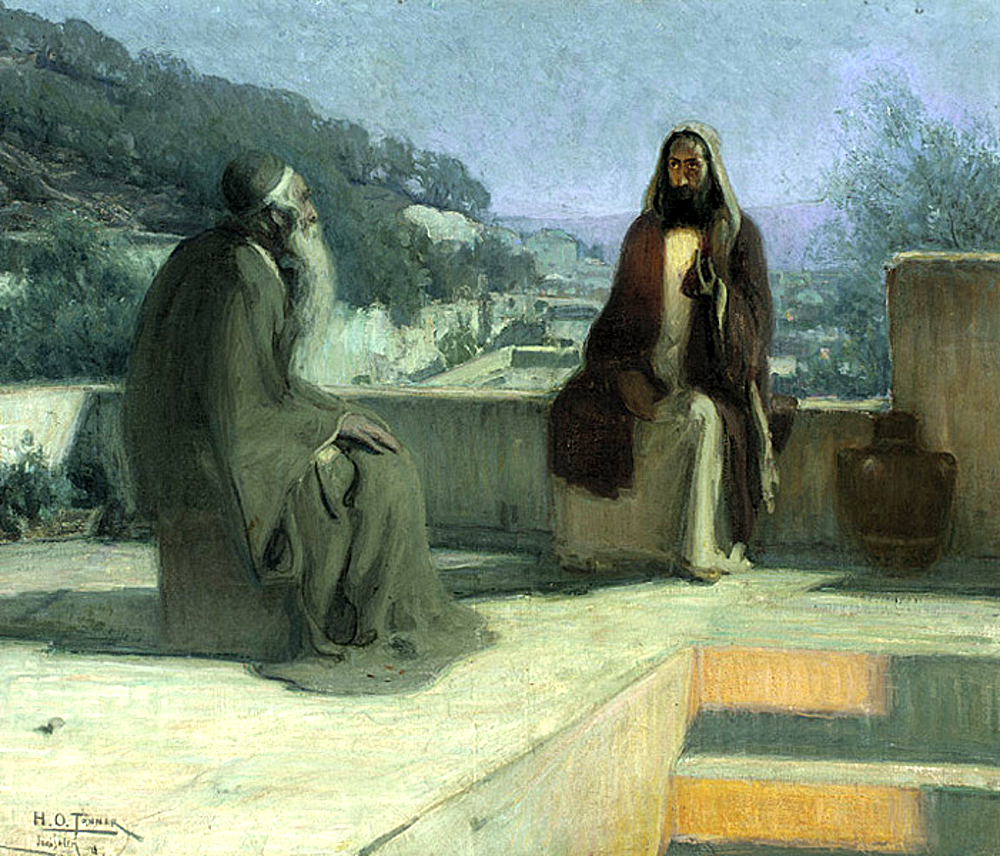
Nicodemus and Jesus on a Rooftop (1899), oil painting on canvas by Henry Ossawa Tanner (1859-1937). Pennsylvania Academy of the Fine Arts, Philadelphia. (Click image to enlarge.)
First Reading: Genesis 12:1-4a
Last Sunday’s Lectionary readings invited us to contemplate temptation in our lives as Lent began. This week, our Lenten lectionary turns to faith: Trust in God. Close your eyes, believe, and take that long leap of faith. In our first reading, we hear the ancestral story of Abram, who God will later rename Abraham. Even in the fullness of years, the patriarch of the chosen people trusted God’s call to uproot his home and family and begin the people’s long journey toward the promised land. For Abram’s faith, God will bless him and his family. Through him, God will bless all the families of the Earth.
Psalm: Psalm 121
The beautiful verses of Psalm 121, perhaps as comforting as the beloved 23rd Psalm, resonate with this week’s Lectionary theme of having faith and trusting in God to watch over and protect us. We lift up our eyes to the hills seeking help, the Psalmist sings; and that help comes from God. We sing our thanks and praise to God, who unfailingly, without pausing to sleep, guards us and protects us from evil, now and forever.
Second Reading: Romans 4:1-5, 13-17
Paul’s pastoral letter to the people in Rome draws us back to Abraham, turning the ancestral story to a new purpose: Abraham was the ancestor of the chosen people in the flesh, Paul writes, and this ancestry was passed down through generations from parent to child, not only to Israel but to many nations. God’s promise of eternal life comes to us, as it came to Abraham, through faith by grace. God does not protect us in repayment for our faith or for anything we do, Paul insists. Grace is not something due to us but a gift given to all the nations, not to Abraham’s descendants alone.
Gospel: John 3:1-17
Nicodemus, a Pharisee, comes to talk with Jesus at night, perhaps waiting until after dark to keep his visit secret from prying eyes. During their conversation, he becomes bewildered by Jesus’s mysterious words. What does it mean to be “born from above,” or, in some translations, “born again”? Nicodemus can’t grasp the distinction between being literally born of flesh as an infant and being born of the Spirit in faith. Then we hear the familiar words of John 3:16, “For God so loved the world that he gave his only Son, so that everyone who believes in him may not perish but may have eternal life.” Does this mean that only Christians can be saved? Jesus’s next words, according to John, emphasize that Jesus did not come to condemn the world but to save it: all the world, all the nations that God blessed through Abraham.