
Thoughts on the Lectionary readings for March 18, 2026 (Ash Wednesday)
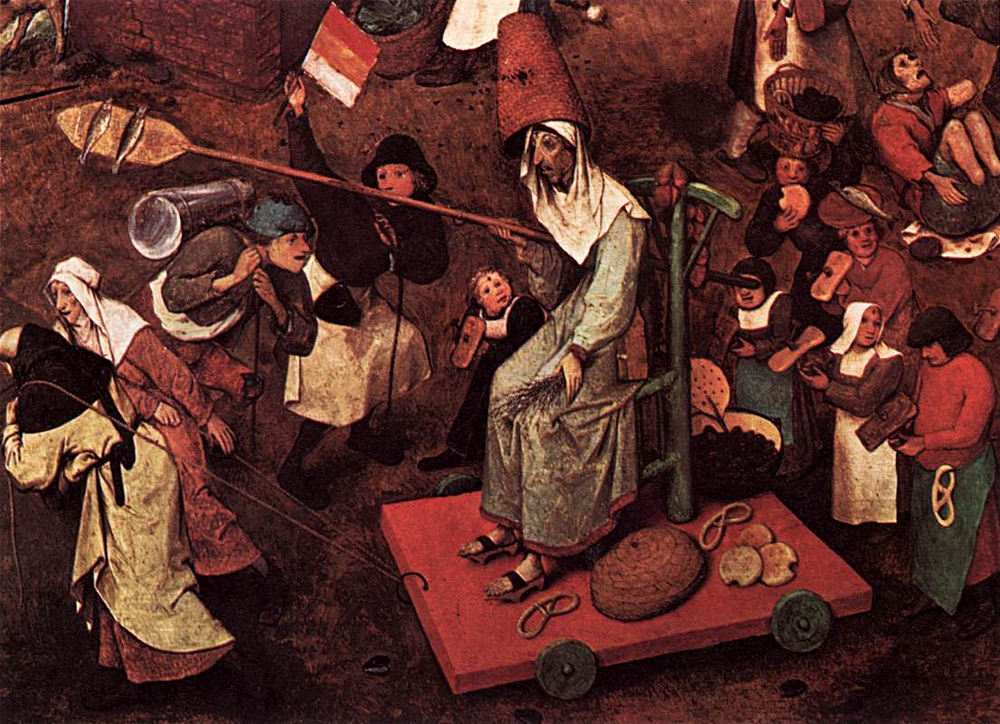
The Fight between Carnival and Lent (1559), detail from an oil painting on panel by Kunsthistorisches Museum, Vienna. (Click image to enlarge.)
First Reading: Joel 2:1-2,12-17
Lent begins on Ash Wednesday. Traditionally a time of penitence and sacrifice, the 40 days of Lent invite us to perform acts of devotion and sacrifice as we reflect on the wrongs that we have done, and recognize the simple truth that we will not live forever. We begin with a reading from Joel, one of the minor prophets. The book that bears his name is only three chapters long, likely written after the people returned to Jerusalem from their exile in Babylon. Much of the short book deals with the people’s prayerful response to a plague of locusts, and in that setting, this reading offers a look back at an ancient time of penitence and sacrifice.
Alternate First Reading: Isaiah 58:1-12
This Ash Wednesday reading draws from a portion of Isaiah that we heard just a few weeks ago. The prophet, addressing the people returning from exile, makes clear that public demonstrations of fasting and prayer, sackcloth and ashes, are not sufficient to please God unless the people also demonstrate righteousness through service and love of neighbor. In language that might have informed both Jesus and his mother, Mary, the prophet reminds the people to oppose injustice: free the oppressed, feed the hungry, house the homeless, and clothe the naked.
Psalm: Psalm 103:8-14
This portion of Psalm 103 resonated with Ash Wednesday: God made us all from dust. God knows well that we are all only dust. We are human: broken and sinful, often wicked. Yet God’s compassion and mercy vastly exceed God’s anger. God does not punish us as we might fear that our sins deserve, the Psalmist assures us; rather, God shows mercy wider than the world itself, forgiving our sins and welcoming us in a parent’s warm embrace.
Second Reading: 2 Corinthians 5:20b-6:10
Throughout much of his second letter to the people of Corinth, Paul attempts to work out an ongoing quarrel among the people of this contentious little church. In these verses, he speaks of reconciliation. He lists the pain and suffering that he has endured as a servant of God, from beatings and imprisonment to sleepless nights and hunger. Accept God’s grace and work together in Christ, he urges the people, as Christ reconciled us with God by taking human form and dying for us.
Gospel: Matthew 6:1-6,16-21
This Gospel passage from Matthew seems ideally suited to the arrival of Lent: Jesus, midway through Matthew’s extended account of the Sermon on the Mount, teaches the crowd how best to practice almsgiving, prayer, fasting, and self-denial of worldly pleasures. These all have become traditional Lenten practices. In words that might remind us of the Isaiah reading we have just heard, Jesus urges the people to pray with humility: Shun hypocrisy. Don’t show off. Keep your charity, your prayers, and your fasting to yourself. Don’t brag about your fast. Don’t hoard fragile, transient earthly riches, but store in heaven the treasures that last.