
Illuminations on the Lectionary readings for April 26, 2026 (Easter 4A)
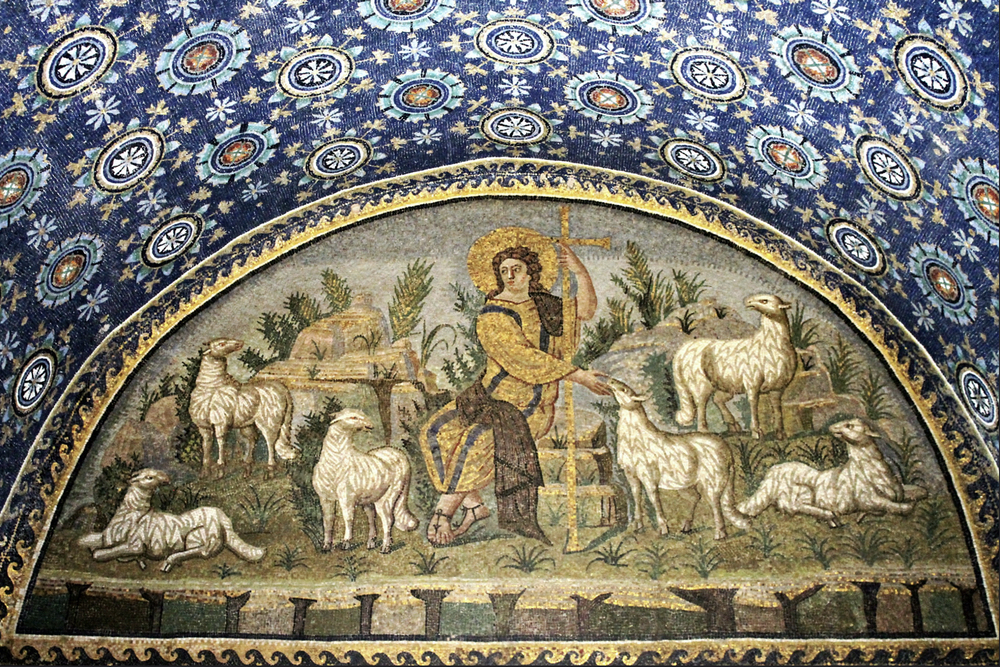
The Good Shepherd (Fifth century CE), mosaic in the mausoleum of Galla Placidia, a UNESCO World Heritage site in Ravenna, Italy. (Click image to enlarge.)
First Reading: Acts 2:42-47
The fourth Sunday of Easter is traditionally called “Good Shepherd Sunday,” as the readings for the day draw our attention to sheep and shepherds as metaphors for God’s protective love. Our first reading continues the Acts of the Apostles’ narrative of the spirit-filled church after the first Pentecost. It tells us how that infant flock lived in loving, sharing community, selling all their possessions and distributing the proceeds to anyone who had need. Following the example set by Jesus, these early Christians recognized the joy and challenge of taking the good news of the Gospel to the world.
Psalm: Psalm 23
The 23rd Psalm is one of the most beloved psalms for the comfort that it offers in times of trouble and fear. To view it in a new way, try reading it in context with the psalm that comes just before it. In Psalm 22, a seemingly desperate hymn of lament, the Psalmist utters the despairing words that Jesus will later call out from the cross: “My God, my God, why have you forsaken me?” Now we turn the page and find comfort in the 23rd’s assurance that our loving shepherd will walk through the valley of the shadow of death with us, watching over us and protecting us all the days of our lives.
Second Reading: 1 Peter 2:19-25
These verses from this letter written in Peter’s name appear troubling in modern times: The author is speaking directly to enslaved people, demanding that they accept the authority of their masters, even if those masters treated them harshly. It is not easy to understand Bible verses that seem to support enslavement and other modern hot-button issues. Still, verses such as these were once used to justify enslavement as being acceptable to God. Perhaps we can simply take this as general advice to all who suffer, remembering that Jesus, too, suffered and died unfairly, having done no wrong. Like lost sheep, we suffer, but we know joy when we return to Christ, our shepherd and guardian.
Gospel: John 10:1-10
Continuing his conversation with a group of Pharisees who were angry because Jesus restored a blind man’s sight on the Sabbath, Jesus makes a clear distinction between the good shepherd, who cares for the sheep, and thieves who break in to steal the sheep. Jesus declares that he is the gate to the sheepfold, and that he is the gatekeeper too, the protective guardian whose familiar voice reassures the sheep and calls each one by name. The gate opens to allow the protected ones to enter, then closes to bar those who would steal, kill, and destroy the beloved sheep. In the next verse after this reading, Jesus will declare, ‘I am the good shepherd. The good shepherd lays down his life for the sheep.”