
Illuminations on the Lectionary readings for Feb. 1, 2026 (Epiphany 4A)
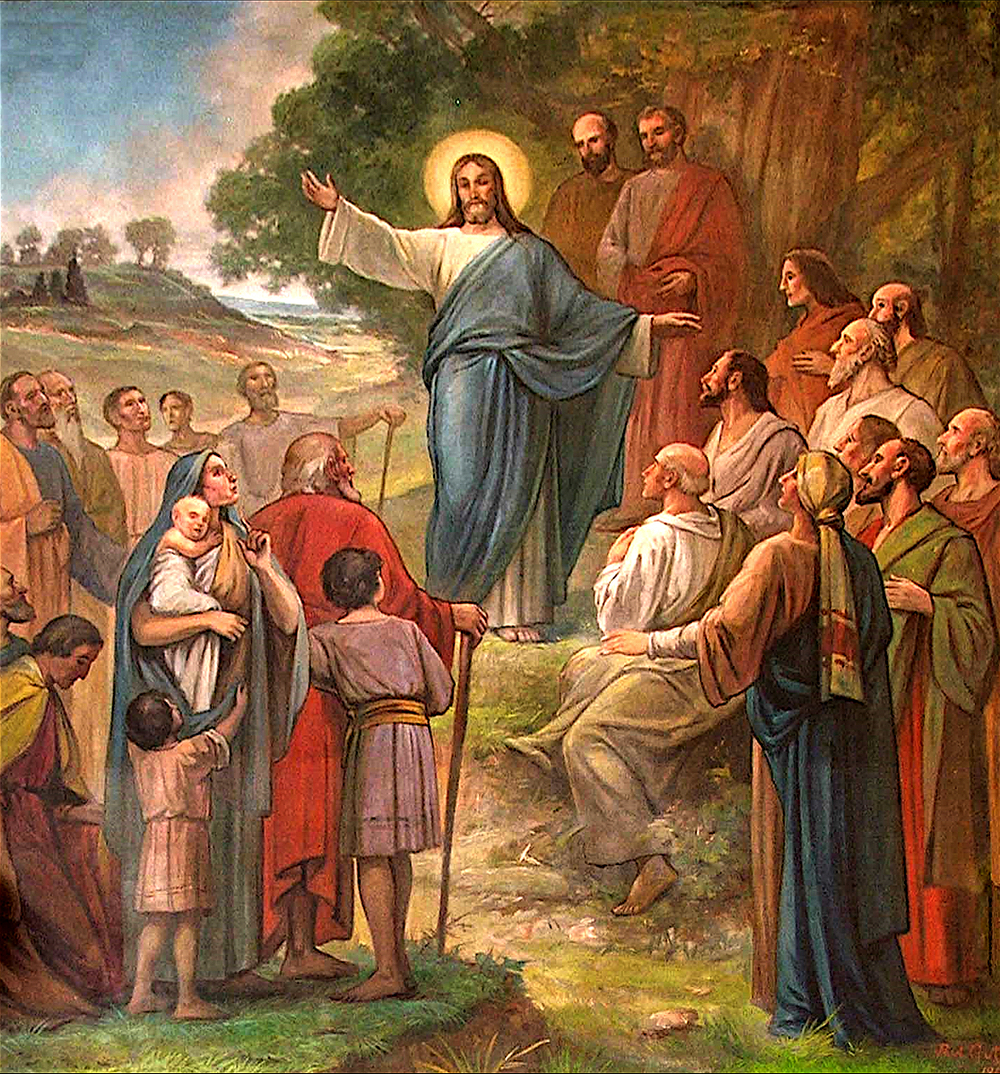
Jesus Proclaiming the Beatitudes (1912), mural designed by Christopher Murphy and painted by Paul Gutsche. St. John the Baptist Cathedral Basilica, Savannah, Georgia. (Click image to enlarge.)
First Reading: Micah 6:1-8
How does God want us to live? Our lectionary readings for the Fourth Sunday after Epiphany speak to us clearly about how we are called to walk in God’s way and to follow Jesus. In our first reading, a beloved verse from the prophet Micah, we are called to respond to God’s love by sharing it with others, simply by doing justice, loving kindness, and walking humbly with God. Micah, as prophets do, warns that we stand before God as a defendant in a trial, pleading our case to a divine Judge who “has a controversy with us.” The One who has done so much for us wants neither burnt offerings nor sacrifices, but good actions on behalf of others.
Psalm: Psalm 15
Historically, Bible scholars believe, this short Psalm may depict ancient Temple liturgy and practice in the form of questions to be called out by priests and answered by the crowd as they process up to the doors. Call: “Who may enter?” Response: “Those who do right, speak truth, don’t slander or reproach, and do no evil.” These are rules to live by in any age. We can easily hear echoes of Micah’s instruction to walk blamelessly, do what is right, and speak truth from our heart.
Second Reading: 1 Corinthians 1:18-31
Continuing his stern lecture to his quarrelsome congregation at Corinth, Paul declares that Jesus’s death on a Roman cross – a gory, horrifically painful execution that Rome reserved for the worst criminals – appears as “foolishness” to those who don’t understand. But, Paul says, in fact the crucifixion and resurrection demonstrate God’s power to save, even from death. God chose this way to celebrate the weak, the poor, and the despised, Paul says, and to shame the powerful and the strong through Jesus, who gives us wisdom, righteousness, sanctification, and redemption.
Gospel: Matthew 5:1-12
The Beatitudes, the beloved verses in Jesus’s Sermon on the Mount as told by Matthew, have become so familiar that we may not always pause to give them the deep reflection that they deserve. In eight quick statements, Jesus turns the world upside down: It is not the rich who are blessed, but the poor. It is not the successful and the proud who win God’s blessing, but mourners, the meek, the hungry; the merciful, the pure in heart, the peacemakers, the oppressed. This is not just good news for the poor; it is earth-shattering. And it is a theme that Jesus repeats again and again, until it is difficult to understand why we have such a hard time getting it.